



What Happens After Inclusion? 5 Lessons on Mainstreaming Participation
/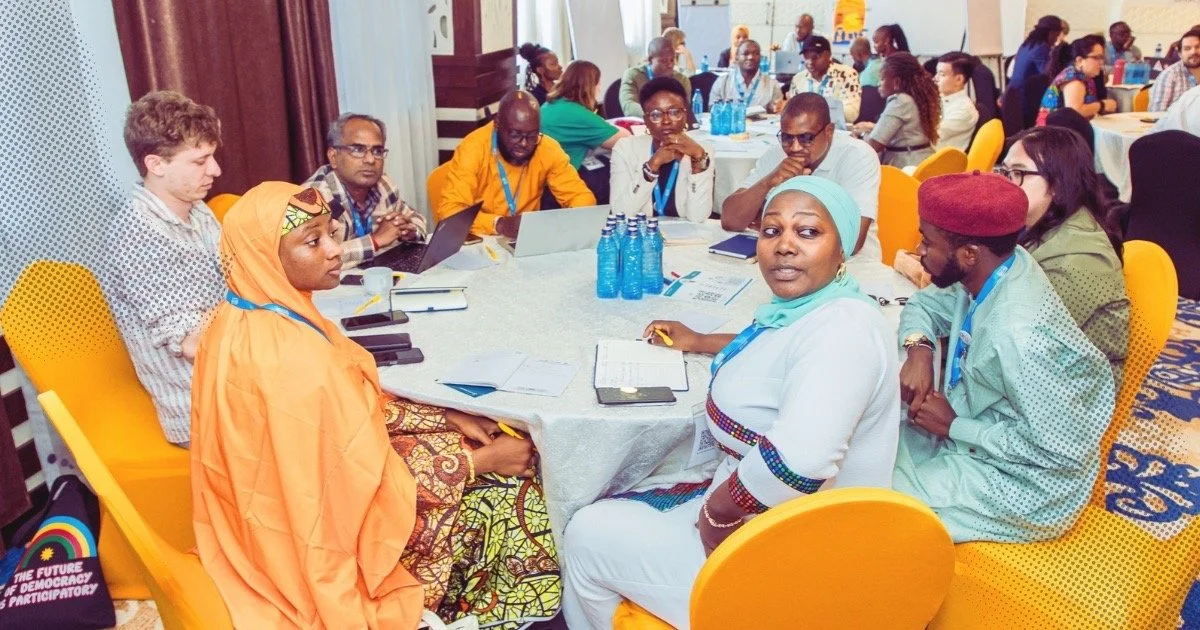
Making participation inclusive and making it last are often treated as separate challenges. On October 28, close to 150 participants from around the world joined People Powered and Open Government Partnership (OGP) to explore how to take on both.
Tim Hughes, OGP’s Lead for Democracy & Participation, set the scene. Many participation efforts, he said, remain as pilots or temporary projects. They make important contributions, but they lack the scale and longevity to change the relationship between people and institutions. That is why OGP and its members now focus on making participation a normal part of how governments work.
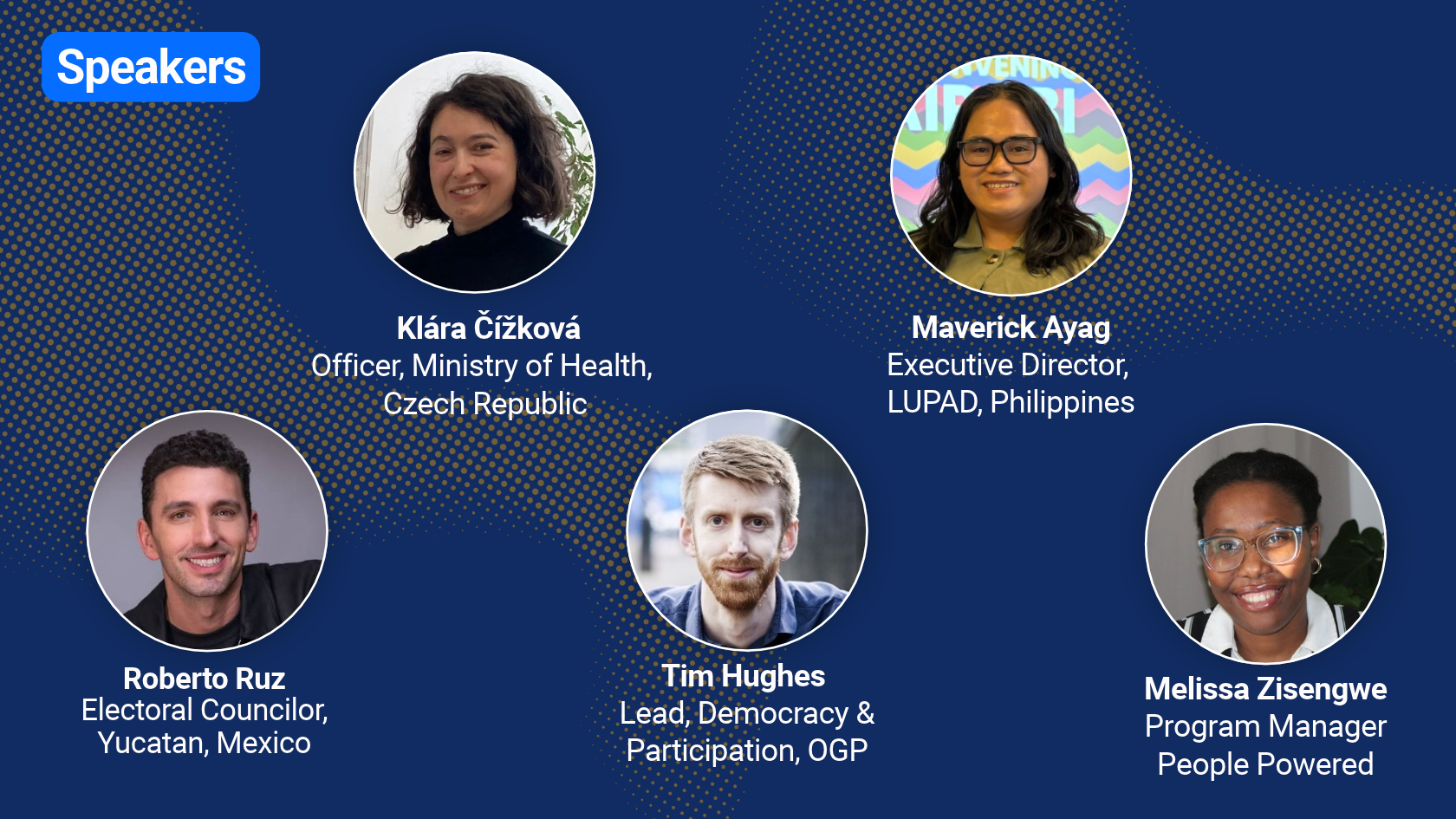
Alumni of People Powered’s Inclusive Democracy Accelerator and Mainstreaming Participation Accelerator shared how they are doing exactly that, each by a different route: a national ministry strategy in the Czech Republic, a state law in Mexico, and young people trained to run their own assemblies in the Philippines. Here are five takeaways from the conversation.
1. Remove the barriers to taking part
Inviting people who are usually left out isn’t enough. The barriers that keep them away have to come down too.
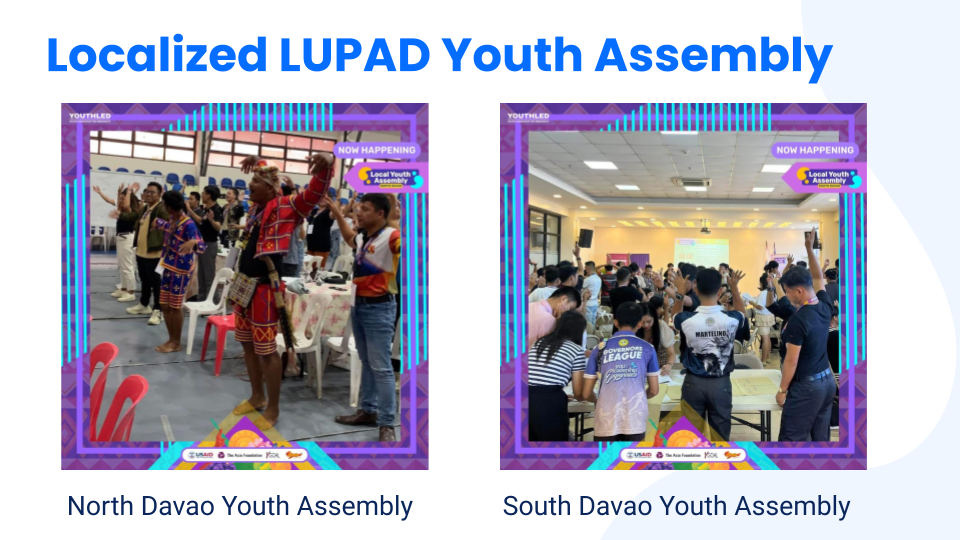
Maverick Ayag, Executive Director of LUPAD in the Philippines, saw that young people from marginalized sectors were often treated as “token participants, numbers for data reporting” in youth programs. So LUPAD held smaller assemblies in North and South Davao, so young people no longer had to travel for hours to take part. They also gave participants a guide in Cebuano, the local language, so young people could run assemblies in their own communities.
At the Czech Ministry of Health, Klára Čížková takes the same approach. Members of the ministry’s new youth working group are compensated for travel, accommodation and food, so taking part costs them nothing.
2. Write participation into the rules
Klára has worked inside the Ministry of Health for a decade. She described the ministry’s official participation strategy as “a foot in the door”: something her unit can always point back to. Working groups and advisory bodies are also built into the ministry’s structure. “It’s not something that just can be easily removed,” she said. Read Klára’s full story.
How Klára maps the ministry’s work
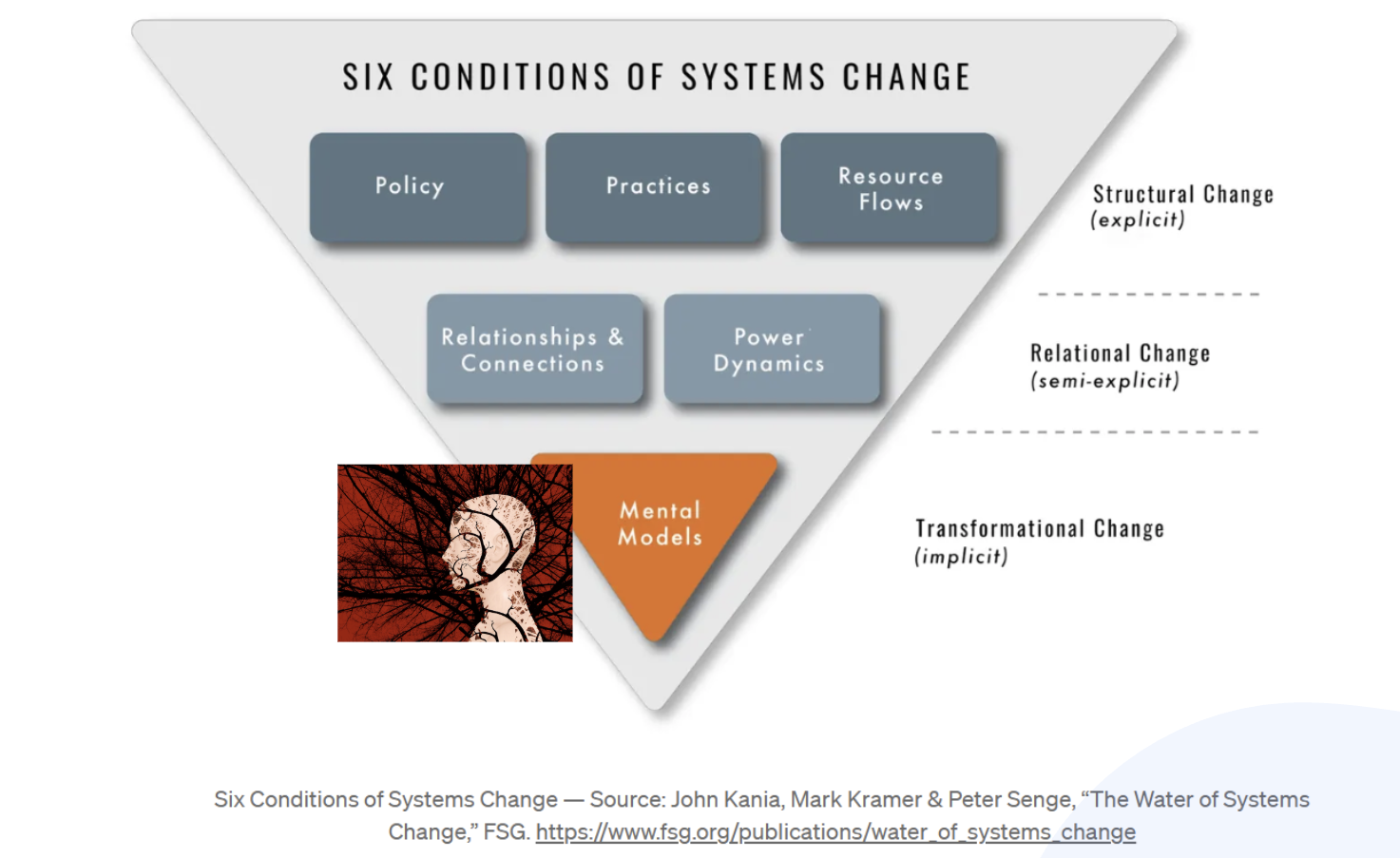
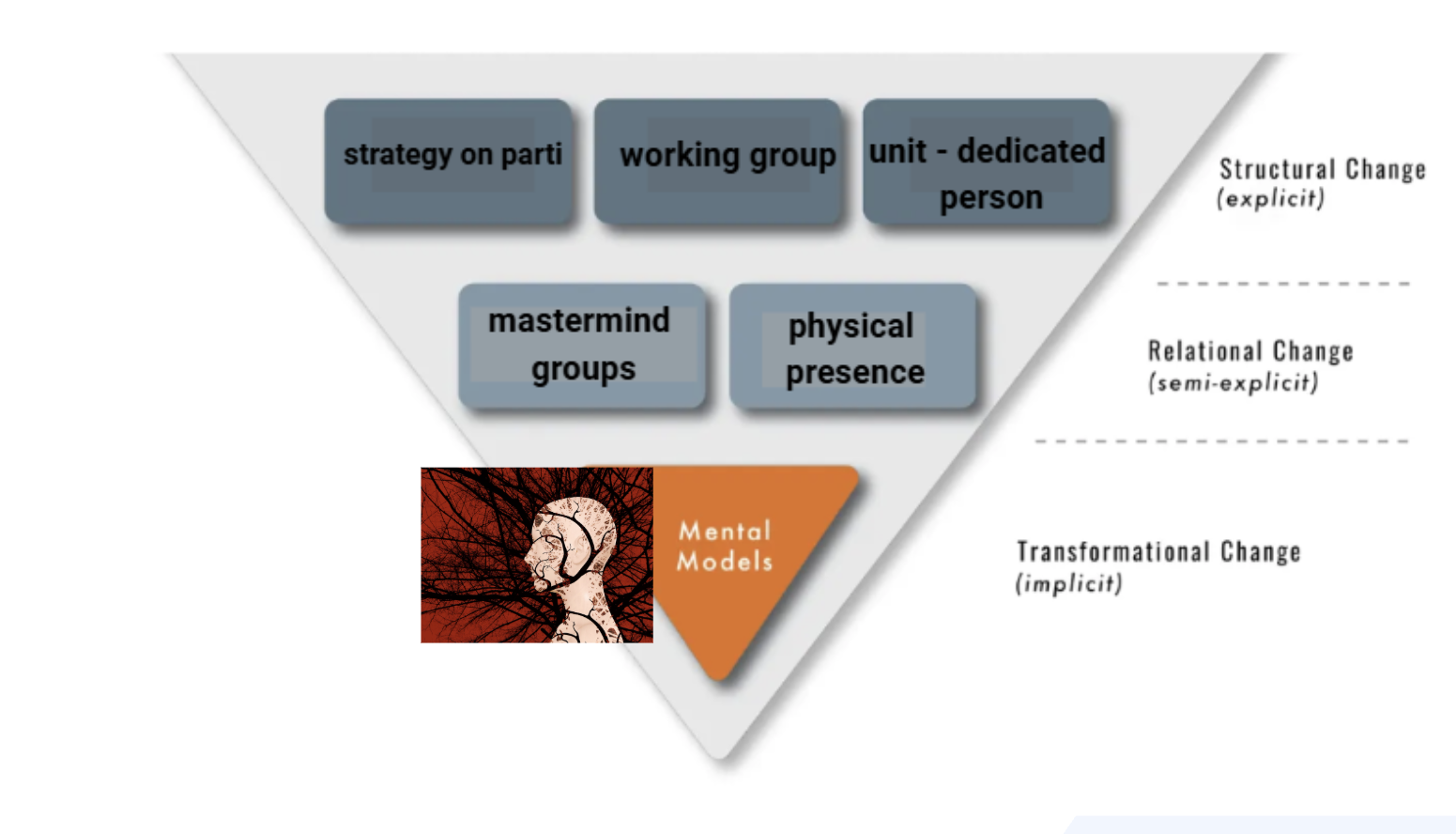
Klára uses a framework Tim Hughes introduced during the Mainstreaming Participation Accelerator: the Six Conditions of Systems Change, from FSG’s “The Water of Systems Change.” Each level has a concrete piece in place at the ministry:
Policy: an official participation strategy
Practices: working groups and advisory bodies built into the ministry
Resource flows: a dedicated participation unit
Relationships: “mastermind groups” within and across ministries
Power dynamics: bringing patients and young people into the ministry in person
Mental models: the long-term goal of changing how decision-makers think about participation
Roberto Ruz, Electoral Councilor at the Institute of Electoral and Citizen Participation in Yucatán, Mexico, showed what happens when the rules don’t work. Mexico has no national law on citizen participation, so people’s right to participate depends on which state they live in. In almost 20 years under Yucatán’s participation law, only 3 of 8 plebiscite requests were held, neither of the 2 referendum requests went ahead, and just one citizen initiative became law, after two and a half years.
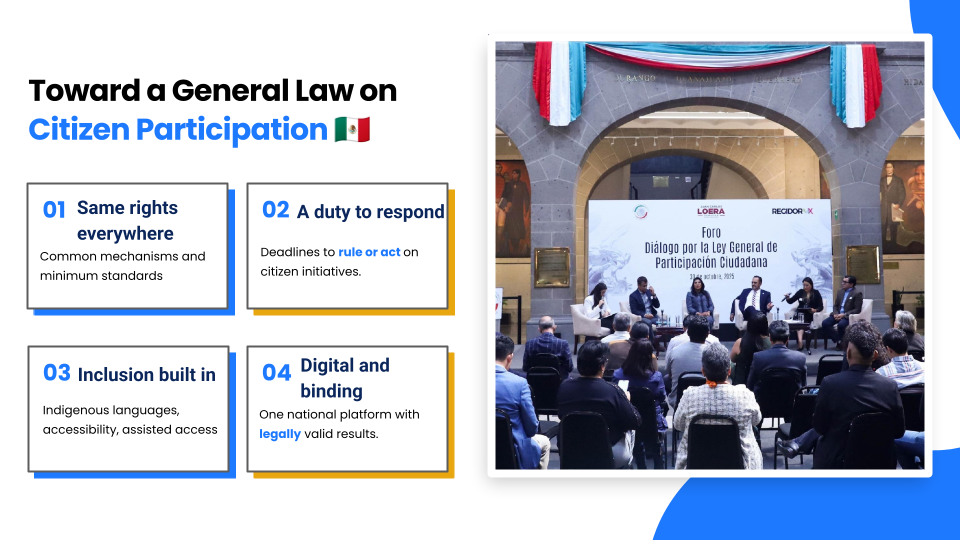
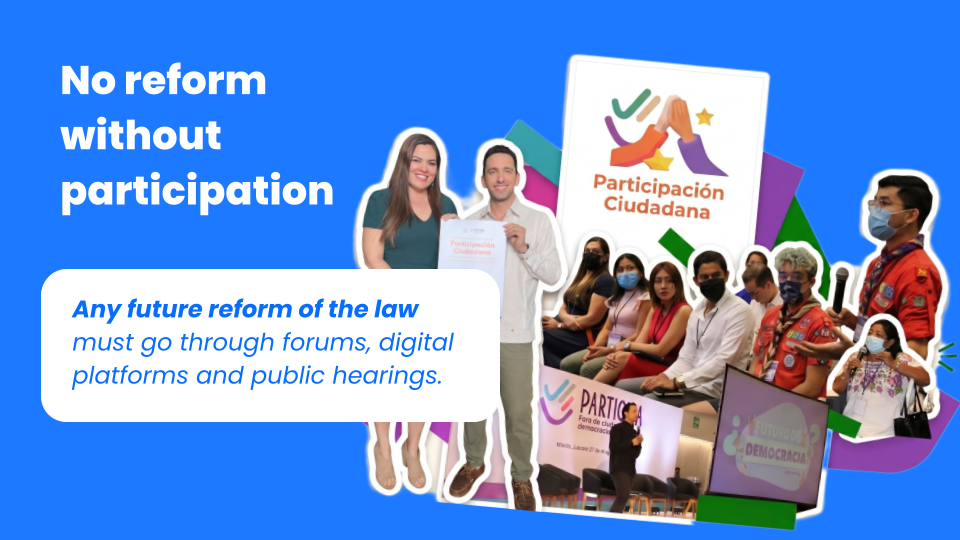
Through the Mainstreaming Participation Accelerator, Roberto’s team identified four barriers in the law and heard from 104 participants at a public forum. When the state congress gave institutes like his the power to propose legislation, they filed the first bill ever submitted by one. The bill would lower signature thresholds, recognize digital ways to support requests and vote, and make it an offense for authorities to ignore binding results.
His advice for anyone reforming these rules: “The rules of participation should not change without participation.”
3. Fund participation like core government work
Without steady funding, participation can’t last. Tim argued that governments should treat it as core infrastructure, and that good participation saves money in the long run by avoiding policies and services that don’t meet people’s needs. “Governments often spend large sums on communicating to the public, but relatively little in listening to them,” he added in the chat.
Roberto put numbers to the gap. Mexico spends close to $1 billion a year at the federal level on elections and political parties, and less than 1% of that goes to participatory democracy.
4. Build relationships inside and outside government
All three speakers stressed that rules and budgets depend on people. Maverick sums up LUPAD’s approach with the acronym SEEK:
Seek government and nongovernment partners with resources and expertise
Ensure problems and inclusive solutions are identified early, through consultation
Engage community leaders from the start
Keep in touch with participants afterwards
Working with local youth officials means the assemblies can become part of the government’s annual plans, so they’re funded and repeated each year.
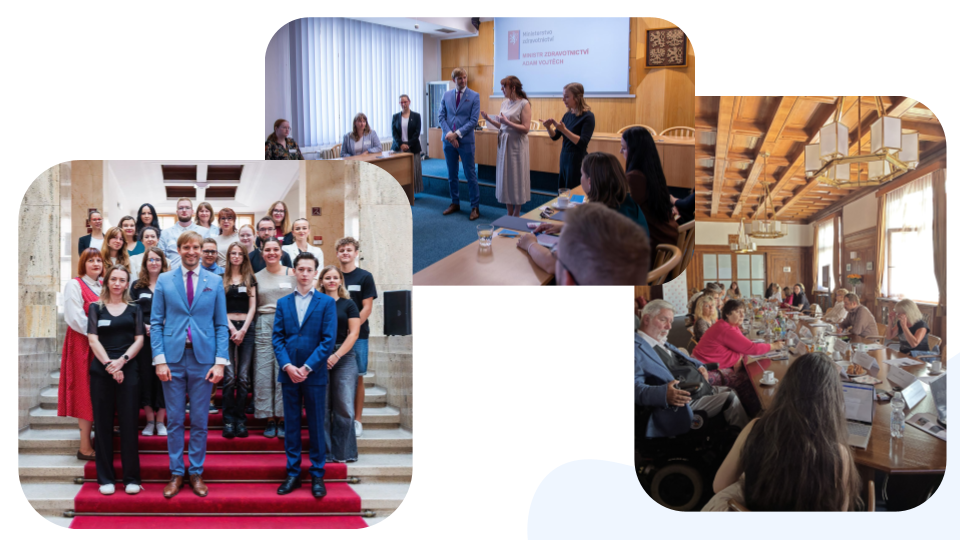
Inside the government, Klára has set up “mastermind groups” in her ministry and across ministries, where colleagues share what’s working and what isn’t. As she put it, structure is only part of the work: “we really do need to get our colleagues excited and wanting to take this journey with us.”
5. Institutionalizing doesn’t make it inclusive on its own
“We can’t assume that because something is institutionalized that therefore it necessarily will be inclusive,” Tim said. “We really need to build inclusion in from the start.”
Klára’s experience shows why. The ministry’s Patient Council brings together 25 patient organizations, but it lacked diversity of age, region and background. A new youth working group, recruited through an open call that drew more than 100 applicants, is already bringing in new perspectives and new topics. Designing for everyone helps too: “If it’s accessible to them, then it’s accessible to everyone.”
Roberto named one obstacle that design can’t fix alone. Answering a question in the chat, he said many parties and authorities “simply don’t want to share decisions. I’d even call it citizen-phobia.”
Watch the full conversation
Put these lessons into practice
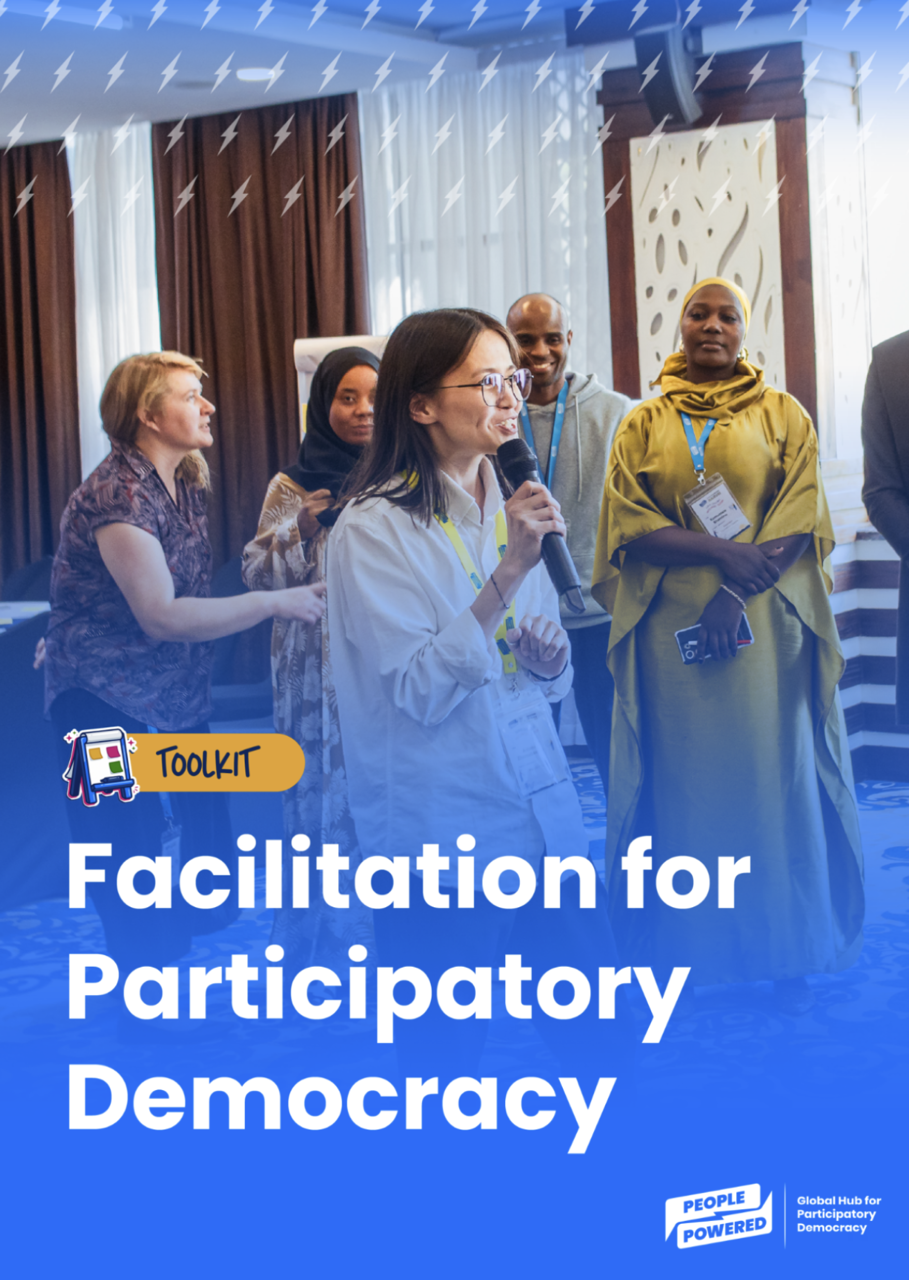
Facilitation Toolkit for Participatory Democracy: our newest resource, launched at the webinar, with practical guidance on running sessions, handling conflict and managing power in the room.
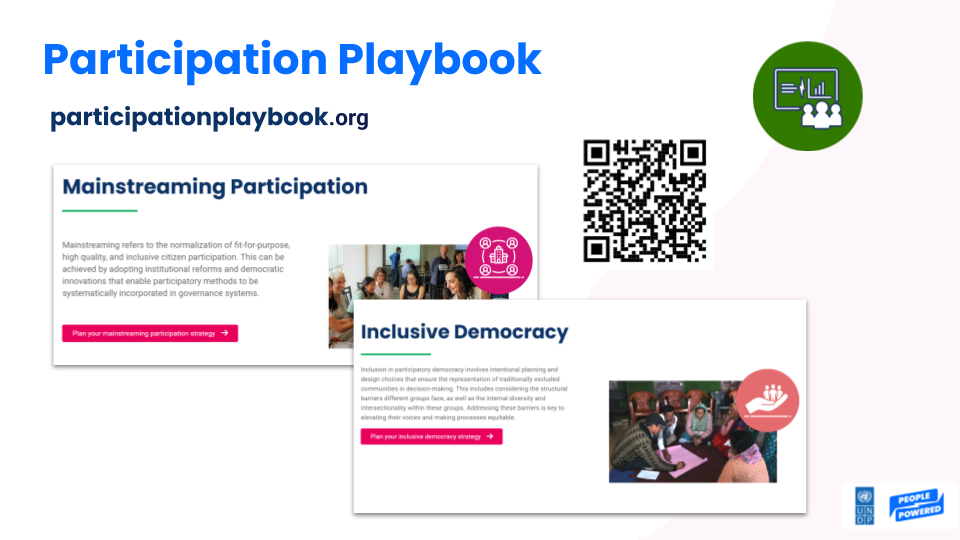
Participation Playbook: the Inclusive Democracy and Mainstreaming Participation modules take you step by step through including people most likely to be left out, and building a strategy to make participation stick.
Apply by November 27
Klára, Roberto and Maverick are all alumni of People Powered’s accelerator programs. “It has really, really helped me feel less alone, but also [gave me] structure and the resources,” Klára shared.
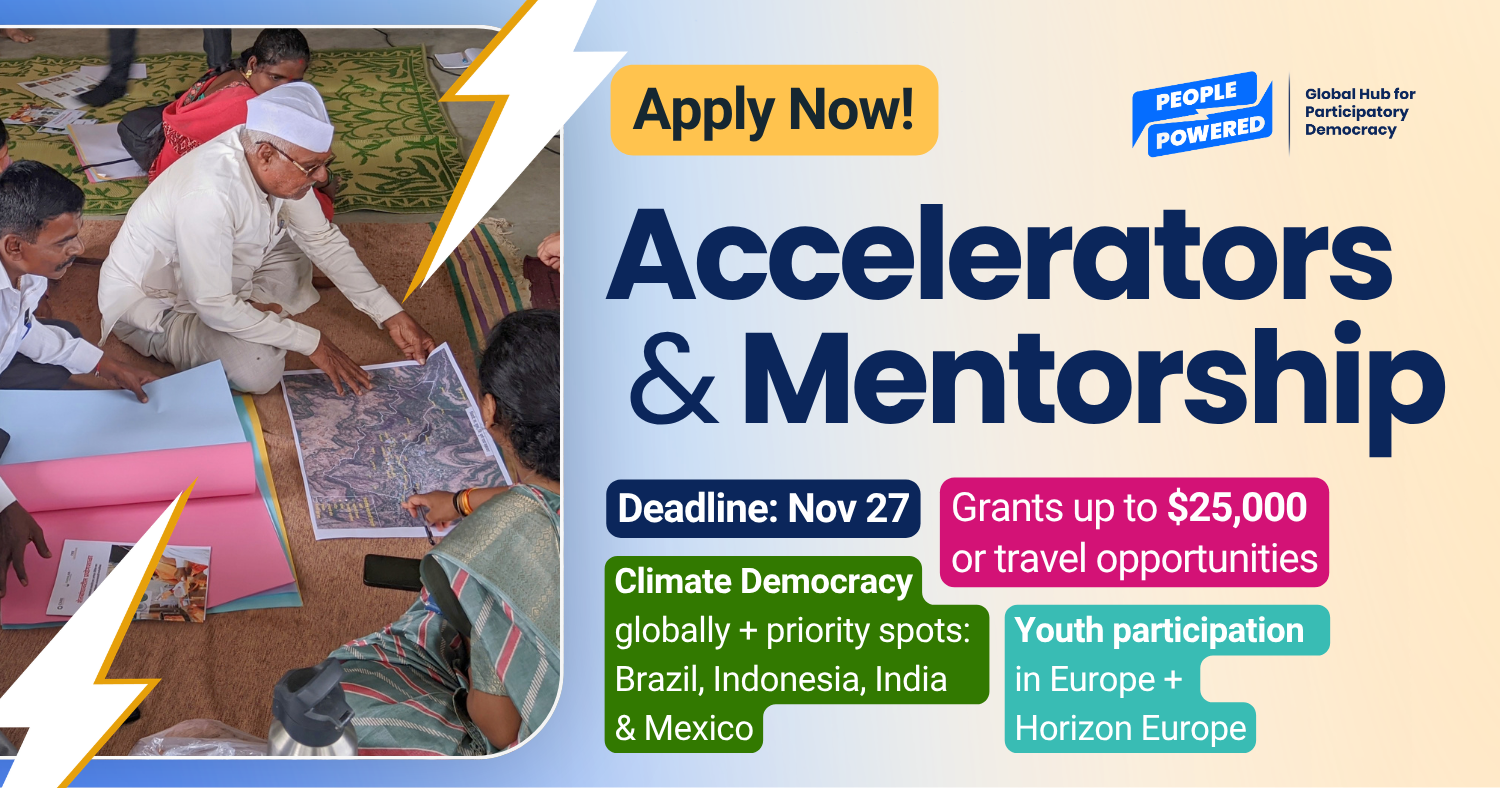
Applications are open for:
Climate Democracy Accelerator: open worldwide, with priority for Brazil, India, Indonesia and Mexico
Democratic Innovations Accelerator: for EU and Horizon Europe countries
Rising Stars Mentorship: for EU and Horizon Europe countries and People Powered members everywhere.
Thank you to our speakers, Tim Hughes, Maverick Ayag, Klára Čížková and Roberto Ruz, whom you can reach out to by clicking their names, and to Melissa Zisengwe for facilitating, and to everyone who joined and filled the chat with questions and ideas.