



68 democracy reformers join the latest People Powered Accelerators and Mentorship
/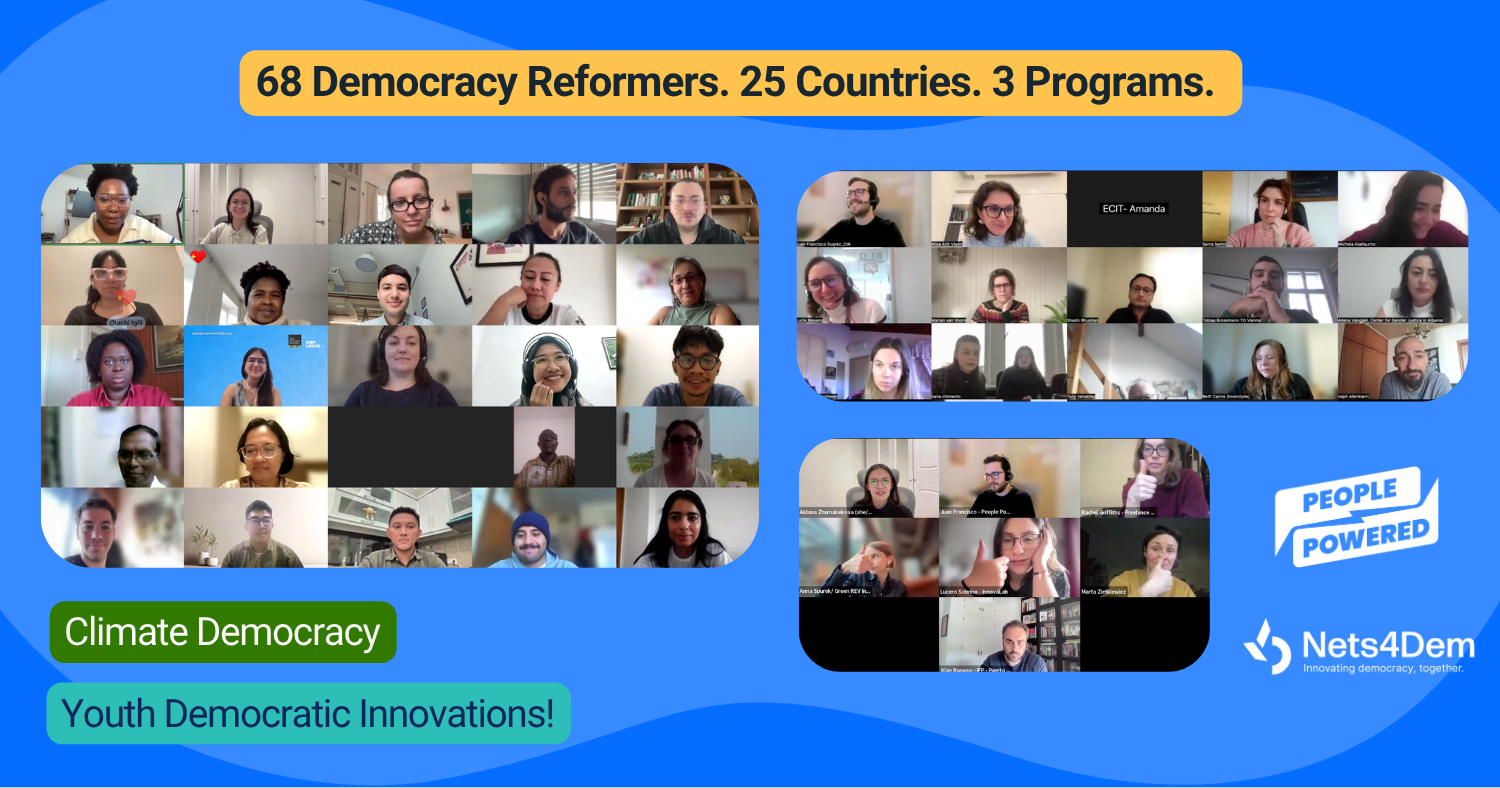
Over the next six months, 68 policymakers, civil society leaders, and democratic reformers from over 25 countries are working to launch and strengthen participatory democracy initiatives in their communities. From regenerative agriculture and community energy governance in the Global South to youth-led democratic innovation across Europe, these changemakers are putting people at the center of the decisions that shape their lives.
In the Accelerator programs and Rising Stars mentorship, they'll receive expert coaching, hands-on training, and access to the expertise of People Powered's global member community. They're using a range of participatory methods, including citizens' assemblies, participatory budgeting, legislative theatre, and deliberative policymaking – and many are blending tools to suit local needs. Mentors will offer peer support with our cutting-edge resources developed through years of experience
See how these new cohorts are building lasting infrastructure for public participation and shifting decision-making power to communities on the ground!
Meet the Cohorts:
Climate Democracy Accelerator (CDA)
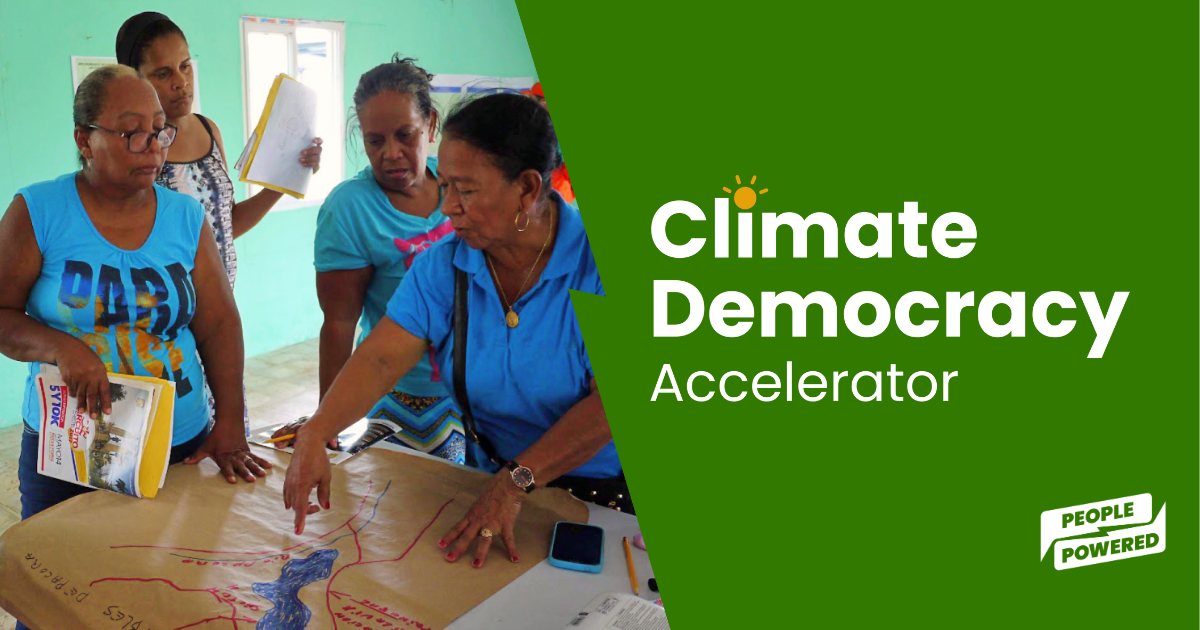
Since 2022, People Powered has been advancing climate action through the CDA, now welcoming its 6th cohort. Through the program, People Powered will support government and civil society leaders in designing action plans to effectively engage citizens in making climate action and policy decisions. At the end of the program, participants will be ready to launch participatory processes for climate action and a just transition — with each team receiving a US$ 10,000 grant and the chance to receive an additional $15,000 award.
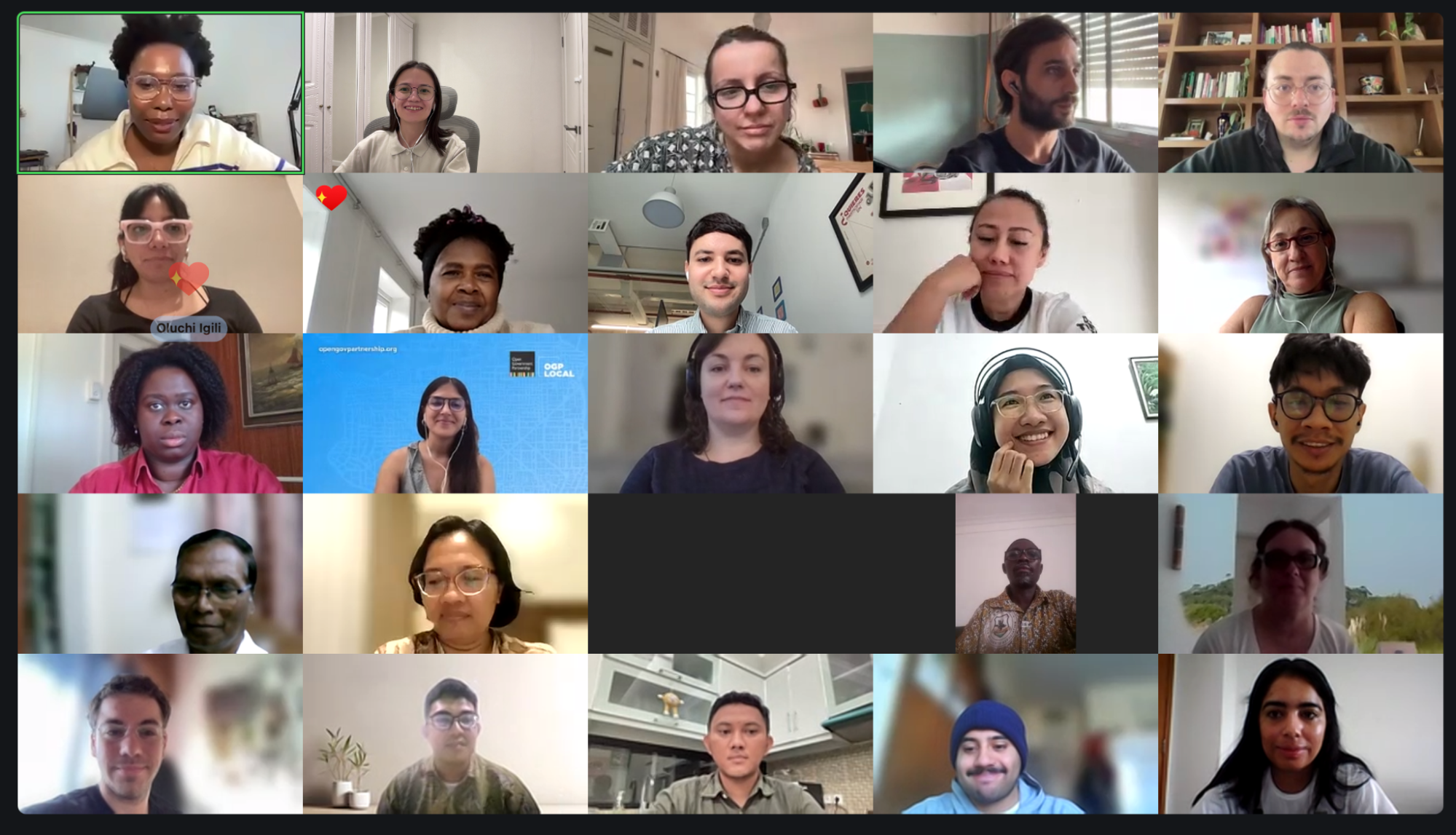
Through an expansion of the program, this cohort focuses on renewable energy and regenerative agriculture — tackling challenges from environmental restoration and food security to community energy governance and climate resilience. The cohort brings together participants from 13 countries, including Brazil, Indonesia, India, Mexico, Chile, Argentina, Kenya, Armenia, Ghana, Mozambique, South Africa, Tanzania, and Nepal.
The program is supported by the Waverley Street Foundation and delivered in collaboration with Open Government Partnership and in-country partners, Accionar.io (Mexico), Participatory Research in Asia (PRIA) (India), Kota Kita (Indonesia), and Delibera Brasil (Brazil), bringing global and local expertise together.
Partido de La Costa, Argentina: Secretaría de Turismo y Desarrollo Sostenible — La Costa, in partnership with Democracia en Red
Implement Environmental Assemblies where citizens co-create strategies to address coastal ecosystem degradation, integrating community-based regenerative agriculture — public gardens, social composting, biodiversity corridors — as a territorial strategy for climate mitigation and citizen participation.
Armavir, Armenia: Armavir Development Center NGO, in partnership with Armavir Municipality
Create a participatory approach to support the municipality’s renewable energy transition through informational sessions, open discussions, and youth engagement to build trust, improve communication, and identify community priorities for future energy planning.
Cruzeiro do Sul, Acre, Brazil: Instituto Fronteiras, in partnership with the Municipal Secretariat of the Environment
Launch a participatory diagnosis and mapping of riverbanks and springs in peripheral neighborhoods most affected by flooding. Community mobilization will establish a “Day of Springs” and a multisectoral Water Forum to monitor rivers and springs through nature-based solutions for climate adaptation.
Itinga, Minas Gerais, Brazil: Fundação Verde Herbert Daniel (FVHD), in partnership with Mandato legislativo Deputada Lohanna França
Create deliberative mini-publics in communities affected by lithium mining to debate the local effects of the lithium value chain on water resources, public health, and livelihoods, placing vulnerable populations at the center of decision-making on renewable energy.
Pernambuco, Brazil: Câmara Federal do Brasil — Gabinete do Deputado Federal Túlio Gadelha, in partnership with Rede de Conhecimento Social
Convene the first state-level Climate Citizens’ Assembly of Pernambuco, where one randomly selected citizen from each municipality in the Capibaribe River basin will deliberate on river preservation and clean-up, prioritizing regenerative agriculture and agroecology as structural solutions.
Brazil: Instituto Caminhabilidade, in partnership with Ministério das Cidades
Develop the National Walkability Strategy through a participatory approach integrated into the National Urban Mobility Plan. Historically marginalized populations — children, older adults, women, persons with disabilities, and residents of peripheral neighborhoods — will engage in deliberative groups on urban mobility and the energy transition.
Chile: CEUS Chile, in partnership with Ministerio de Energía
Carry out participatory policy-making workshops in vulnerable communities in southern Chile to identify barriers to renewable energy integration and energy poverty, linking the process to Chile’s Climate Change Framework Law and the Energy Ministry’s Decarbonization Plan.
Asene Manso Akroso, Eastern Region, Ghana: Ministry of Food and Agriculture, in partnership with Centre for Sustainability and Environmental Action
Convene a District-led Citizens’ Assembly to address declining soil health, ecosystem degradation, and climate vulnerability through regenerative agriculture. Randomly selected participants — farmers, youth, women’s groups, persons with disabilities, and traditional leaders — will deliberate on soil restoration, cover cropping, and climate-smart land management guided by experts.
Dasapalla Block, Odisha, India: Orissa State Volunteers and Social Workers Association (OSVSWA), in partnership with the Office of the Block Chairman
Convene inclusive village climate assemblies where farmers, women’s self-help groups, youth, Adivasi communities, and landless workers jointly identify climate risks and co-create a Block Regenerative Agriculture Forum with action plans for composting, agroforestry, and water harvesting.
Balangir, Odisha, India: Janamukti Anusthan, in partnership with local government departments
Establish Village Climate Dialogues, Farmer Deliberation Circles, and a Block-level Climate Working Group to address soil degradation, water scarcity, and indigenous seed loss. Community-driven plans will be integrated into government extension programs.
Mohana, Odisha, India: Association for Tormented Man’s Aid (ATMA), in partnership with Damadua Gram Panchayat
Form a Participatory Climate-Resilient Agriculture Forum enabling smallholder farmers to shape regenerative farming strategies through structured dialogue, participatory mapping, and scenario planning in fragile, rain-fed valley ecosystems.
Ganjam and Gajapati, Odisha, India: Voluntary Integration for Education and Welfare of Society (VIEWS), in partnership with Agriculture Technology and Management Agency (ATMA)
Facilitate village-level Climate Agriculture Assemblies where tribal communities, women, and marginal cultivators prioritize regenerative practices and train youth and women as Climate Mitras to support adoption and community monitoring.
Rajasthan, India: Unnati — Organization for Development Education, in partnership with Local Self Government (Panchayat)
Address climate challenges in the Thar Desert — soil degradation, desertification, and prolonged drought — through horti-pasture systems and regenerative practices led by trained local women farmer-leaders (Kheti Sathins) who enable peer-to-peer learning in smallholder communities.
Kapuas Hulu, Indonesia: Madani Berkelanjutan Foundation, in partnership with the Government of Kapuas Hulu Regency
Introduce a community-based bioenergy governance model placing forest-dependent communities at the center of decision-making on locally-sourced biofuel production, managed through Village-Owned Enterprises (BUMDes) with social finance mechanisms.
Pandeglang, Banten, Indonesia: PATTIRO Banten, in partnership with Banten Province Environment and Forestry Service
Initiate a deliberative Citizens’ Assembly to promote regenerative agriculture in drought-prone communities, directly involving 300 families in building climate resilience based on local wisdom.
Brebes, Indonesia: ESKA Unggul Indonesia (ESKA Foundation), in partnership with BAPPERIDA Brebes Regency
Convene the Brebes People’s Grand Discussion — a deliberative forum using the Citizens’ Assembly approach to develop regenerative agriculture policies for the shallot-farming region, addressing soil degradation, declining farm incomes, and maternal and child health.
Semarang, Indonesia: Ikatan Pelajar Muhammadiyah, in partnership with Dinas Lingkungan Hidup Kota Semarang
Launch “Semarang Without Waste” (#SemarangTanpaSisa), integrating citizen assemblies and local participatory planning to co-design waste segregation, composting, and bioreactor-based biogas generation at the neighborhood level, with a draft local regulation on organic waste management.
Semarang, Indonesia: Yayasan Amerta Air Indonesia, in partnership with Commission C of the PKS Faction, Semarang City Regional Representative Council
Co-create a Community-Driven Planning Scheme among mangrove planters and fishpond farmers, integrating regenerative aquaculture with ecological restoration through a participatory “transformative laboratory” approach.
Ikolomani, Kenya: Dream Hatch Kenya, in partnership with Kakamega Environmental Education Program (KEEP)
Introduce Nafsi ya Ikolomani, a participatory regeneration model that fuses cultural heritage, gender equity, and climate resilience. The project reclaims abandoned artisanal gold mining lands for women’s groups and local youth, using traditional Isukuti dance, storytelling, and community gatherings as participatory spaces for collective decision-making alongside tree planting and indigenous seed cultivation.
Kibera, Nairobi, Kenya: Maida CBO, in partnership with Nairobi City County, Department of Environment, Water, and Energy
Convene a Kibera Land Resilience Assembly to combat climate-induced flooding through regenerative agriculture, co-creating a Community Land-Use Action Plan with riverbank buffer zones and raised gardens that integrate food sovereignty with disaster resilience.
Acaxochitlán, Hidalgo, Mexico: Ollin, Jóvenes en Movimiento, in partnership with the Municipality of Acaxochitlán
Implement participatory budgeting through a Women’s Citizens’ Assembly, where women selected through stratified representation — including Indigenous communities, rural areas, and persons with disabilities — deliberate on and develop a local climate adaptation project addressing water scarcity and forest degradation.
Del Nayar, Mexico: Centro para el Desarrollo Social y la Sustentabilidad Nuiwari A.C., in partnership with Ayuntamiento Del Nayar
Strengthen community capacities for climate adaptation through deliberative spaces and participatory diagnosis, creating a community garden, biofactory, and apiaries, with a focus on transgenerational dialogue and the Naayeri worldview.
Mexico City, Mexico: Práctica: Laboratorio para la Democracia, in partnership with the Secretariat of the Environment of Mexico City
Convene the Climate Councilmembers Coalition — 12 city councilmembers from 10 boroughs alongside civil society organizations — to promote participatory climate action from the local level, including energy poverty diagnoses, urban resilience mapping, and low-carbon mobility plans.
Puebla, Mexico: Hackers x Nuestro Futuro (Nuestro Futuro AC), in partnership with the Secretariat of Science, Technology and Humanities of the State of Puebla
Create the Puebla State Model of Youth Energy Democracy, establishing participatory energy diagnoses, Youth Deliberative Tables, and a Community Energy Pilot Project co-created and voted on by young citizens to demonstrate a just transition designed with people, not for them.
Tuxtla Gutiérrez, Chiapas, Mexico: Ligalab Ideas que Unen A.C., in partnership with Dirección de Áreas Naturales y Vida Silvestre
Develop a model of participatory ecological regeneration in the Sabinal River sub-basin, integrating the Miyawaki method of rapidly growing native forests with placemaking-based co-design, transforming degraded river margins into community-governed climate refuges.
Namacurra, Mozambique: ACAMBIDEC, in partnership with the District Government of Namacurra
Launch Macuze Resiliente, a participatory climate-governance initiative where farming communities co-design regenerative agriculture solutions through inclusive workshops and participatory GIS mapping, developing a Local Adaptation and Regenerative Restoration Roadmap.
Tulsipur, Nepal: Open Knowledge Nepal, in partnership with Tulsipur Sub Metropolitan City
Establish the Climate Resilient Farming Council (CRFC) — a participatory governance mechanism bringing together farmers, women cooperatives, Indigenous Tharu and Kumal communities, youth agripreneurs, and municipal officials to co-design climate-smart interventions with a digital Regenerative Action Monitor.
Khayelitsha, Cape Town, South Africa: Urban ThinkTank Empower, in partnership with the City of Cape Town
Lead a community-led Climate Energy Deliberation Process in an informal settlement, enabling residents to shape renewable-energy decisions through facilitated community assemblies, neighborhood energy-mapping, and deliberative workshops on safety, affordability, and climate resilience.
Lushoto, Tanzania: LandGuard Alliance, in partnership with Lushoto District Council
Launch the Usambara Regeneration Assembly, empowering 520 smallholder farmers — including 280 women and 156 youth — across 8 villages to govern 500 acres of regenerative agriculture through binding citizen assemblies and participatory scorecards, generating a formalized District Regenerative Agriculture Policy.
Now in its fourth iteration, the DIA is supporting the next wave of democratic reformers who aim to implement participatory programs that transform Europe's democratic landscape, from the local to the regional level.
For this cohort, the focus is on developing participatory programs that engage youth in policymaking and governance — in schools, local communities, and local government — across the EU and Horizon Europe area.
With a range of expert partners and mentors hailing from similar contexts and geographies to the cohorts, the DIA provides highly focused and tailored support for a range of participatory programs. At the end, participants will be set up for success with fully developed action plans.
Run with our partner Coglobal as part of the Nets4Dem initiative.
Lushnje, Albania: Tanushe Muhametaj, Municipality of Lushnje, in partnership with Albania Sustainable Development Organization (ASDO)
Launch “Youth Voices in Action,” a participatory-deliberative initiative where youth aged 15–30 co-design and implement the local youth plan through structured assemblies, digital deliberation platforms, thematic working groups, and neighborhood pop-up sessions — with the municipality committing to adopt at least two youth-led pilots.
Tirana, Albania: Adena Vangjeli, Center for Gender Justice in Albania, in partnership with Lushnja Municipality
Launch “Young People Leading Change” to engage youth in local decision-making through meetings with the Municipal Council and Mayor, storytelling events with public figures, and a Situational Analysis of existing youth-related strategies — building structured cooperation between young people and local authorities.
Tirana, Albania: Marilo Meta, LDA Europe, in partnership with ACT Center
Create a Youth Participatory Policy Lab — a practical, repeatable model where young people pick a local issue, gather community input, and co-design solutions in open sessions with municipal staff, using participatory mapping and feedback surveys to turn youth interest into a real pathway for shaping policy decisions.
Metsamor, Armenia: Azganush Mnatsakanyan, Armavir Development Center NGO, in partnership with Metsamor Municipality
Launch a participatory initiative involving young people in shaping and advancing Metsamor’s Open Government Action Plan — a commitment that recently received an OGP Challenge Award — through inclusive engagement strategies, youth-friendly deliberative activities, and an Ambassadors Network.
Vienna, Austria: Joschka Köck, Theater der Unterdrückten Wien, in partnership with WMS Kölblgasse and Verein Wiener Jugendzentren
Implement the first Legislative Theatre in a School, creating a more participatory school community together with students, parents, and teachers — using Theatre of the Oppressed methods to transform how young people engage with democratic decision-making in educational settings.
Brussels, Belgium: Tony Venables, European Citizens’ Rights, Involvement and Trust (ECIT) Foundation
Lead “All on Board,” a youth-driven, participatory campaign preparing the launch of a European Citizens’ Initiative (ECI) to make European citizenship a lived reality. Through national coordinators and local Youth Task Forces across Europe, young people will co-design, lead, and advocate for their rights to European exchange experiences and cross-border recognition of qualifications.
Saint-Germain-En-Laye, France: Natasha Litherland, Sunflower
Scale Sunflower, a functional open-source mobile platform that bridges European youth and democratic institutions through accessible Open Data, transforming complex datasets from Eurostat and national statistics offices into intuitive visualizations while connecting digital engagement to local participatory events.
Leipzig, Germany: Ralph Ellermann, Conducive Space for Peace
Build lasting infrastructure for deliberation and civic action among European youth movements, centering groups led by youth with post-migrant perspectives working from feminist principles. The project cultivates cross-European relationships for shared consciousness-building, democratic mandates from below, and concerted action to impact political outcomes.
La Spezia, Italy: Maria Michela Giallaurito, APS Senza Confini
Launch Youth Civic Lab, a participatory and deliberative program empowering young people (18–30) to co-create policy proposals with local institutions through monthly co-design workshops, a Youth Citizens’ Assembly of 25–30 participants, and an institutional dialogue process focused on involving marginalized youth including NEETs, young migrants, and women.
Luxembourg: Shashi Bhushan, Foodsharing Luxembourg
Launch the We Decide Lab (WDL), a six-month programme targeting 20 young non-Luxembourgish residents (aged 18–35) to address the democratic gap — where only 5.9% of eligible young adults registered for the 2023 municipal elections. Cohorts will co-design and present cross-municipal policy proposals on affordable housing, job security, and local experiences of racism.
Glodeni, Moldova: Gloria Cheptea, The Laboratory for Development Initiatives (LID Moldova)
Propose “Youth Policy Co-Creation Labs,” creating structured deliberative spaces in 8–10 districts where young people from rural and vulnerable regions co-design local policies with public authorities. The initiative culminates in Youth–Government Co-Creation Forums where young people present proposals and negotiate implementation with local authorities.
Groningen/Assen, Netherlands: Marian van Voorn, JongerenTop, in partnership with Municipality Assen
Create the “Assen Ambassadors” — a group of young people selected by lottery who will use a deliberative structure to put issues on the municipality’s policy-making agenda while acting as youth leaders to engage and empower other young people.
Barcelona, Spain: Lucía Mayans, Generalitat de Catalunya
Design “Participa a l’Escola” (“Participate at School”), a child participation program where students aged 9–10 across 7 pilot elementary schools actively take part in public policy processes of the Government of Catalonia — with the key innovation that their contributions will have direct impact on real policies.
Málaga, Spain: Marlene García, Talento para el Futuro
Create a network of youth participatory assemblies embedded in high schools and universities across Spain, with periodic deliberative sessions on online safety, digital rights, social inequality, and climate challenges. Representatives will gather in inter-school meetings and present synthesized insights to Spain’s Ministry of Youth and Children.
Adana, Turkey: Adil Murat Vural, Adana Metropolitan Municipality, in partnership with Freedom and Equality for Women Association (KÖVED)
Propose “Youth Voices for Resilient Adana,” engaging 100 young people — prioritizing women and refugees — to co-design urban resilience policies through a digital-first deliberative platform. A Citizens’ Assembly with 50% youth representation will refine proposals into actionable policies for Adana’s 2026–2030 Strategic Plan.
Istanbul, Turkey: Serra Semiz, Arayüz Campaign
Create a hybrid Youth Citizens’ Assembly where diverse young people (18–30) — including LGBTI+, working-class, migrant, and rural youth — co-design and deliberate on housing, education, climate, and digital rights. Each cycle produces a co-written Youth Policy Dossier with public follow-up sessions tracking commitments.
Edinburgh, UK / Kenya: Agnes Angule, ClimateClan360
Launch Youth Climate Voice Labs engaging secondary-school students in Kenya and Scotland to co-design democratic innovations for climate governance. Through structured youth assemblies and a gamified app, young people deliberate on local sustainability issues and present community climate plans to local councils.
Inverclyde, UK: Beth Cairns, Inverclyde Council
Create a youth advisory group bringing together representatives from youth councils, LGBTQIA+ youth groups, secondary school pupil councils, and care-experienced youth to meet directly with local government decision-makers 2–3 times per year, working collaboratively on creating change for young people.
Manchester, UK: Busayo Morakinyo, Creative Ideation Hub
Develop CitizensNgage, a mobile-first platform that democratizes local governance for youth aged 16–30 through accessible governance data dashboards, interactive participation tools, and a paid Youth Ambassador program — aiming to engage 1,000+ youth across 3–5 UK councils.
Rising Stars offers expert coaching for government officials, staff, and advocates who want help with a participatory process. Mentors comprise People Powered members who bring expertise from across the globe. Rising Stars is open to mentees from across the globe. It's designed for practitioners working through specific challenges in running or improving participatory programs — those who need targeted coaching rather than the comprehensive support of the Accelerators.
Run with our partner Coglobal as part of the Nets4Dem initiative.
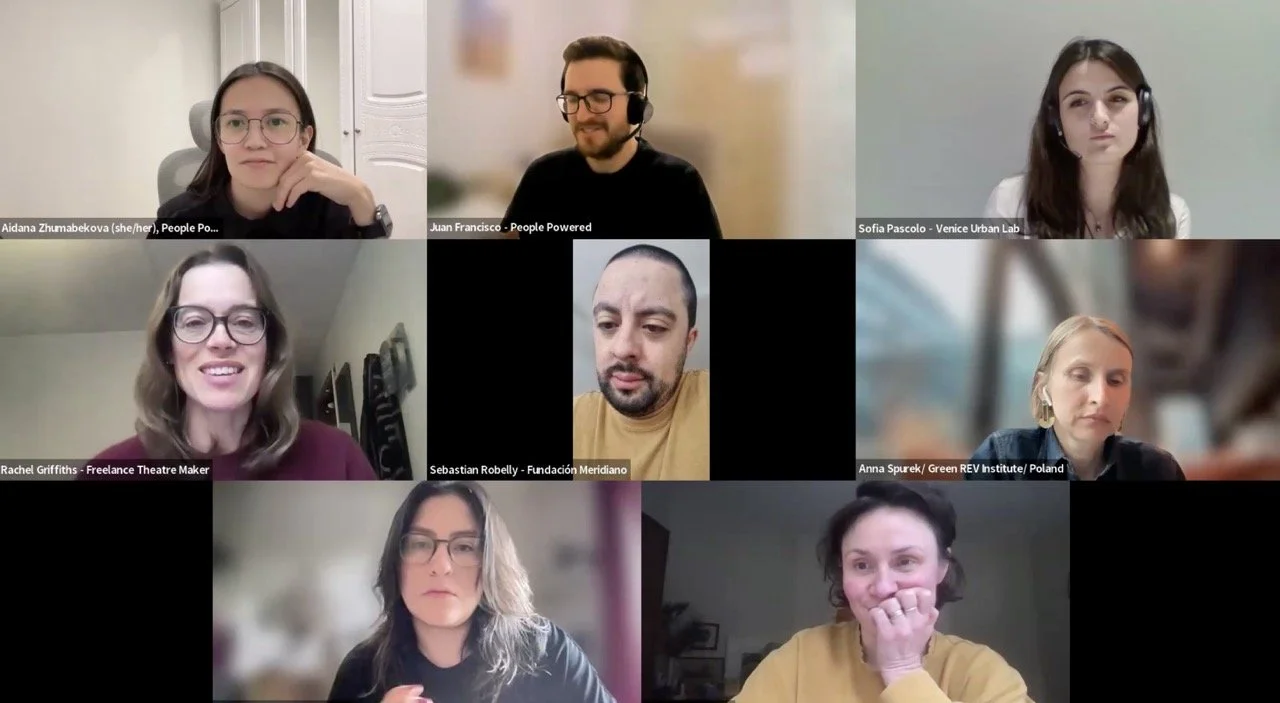
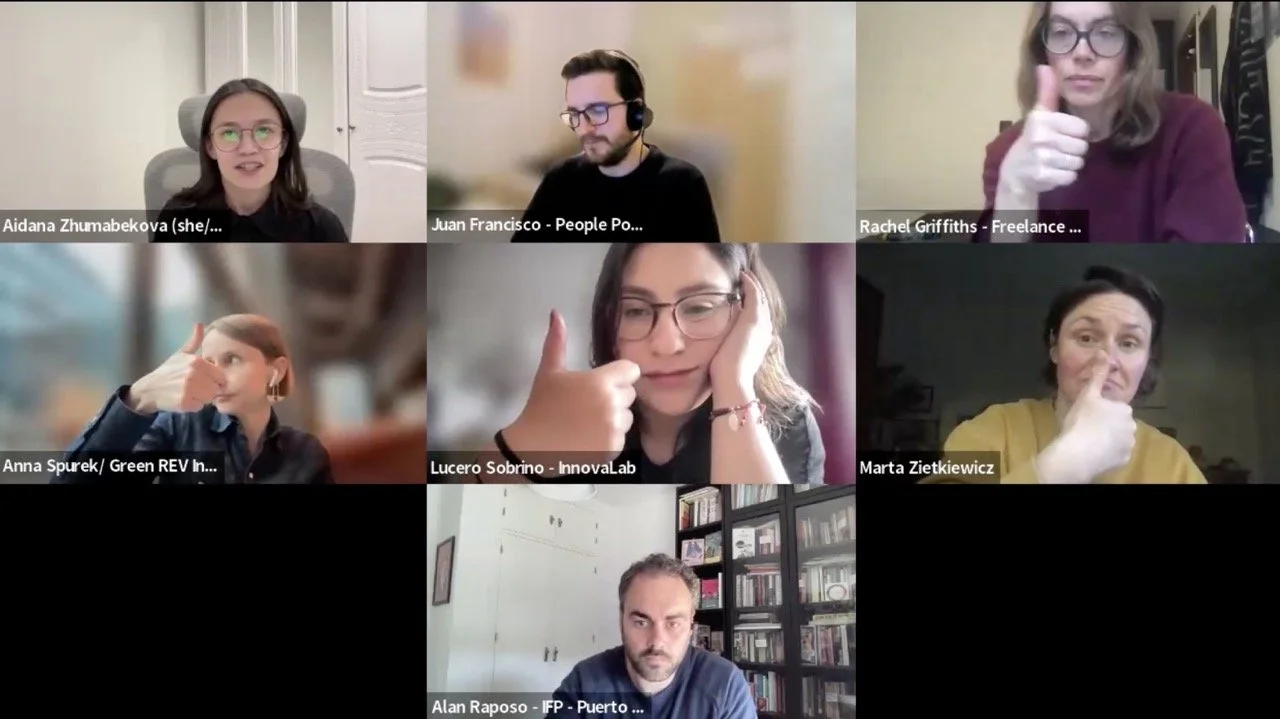
Brazil: Júlia Moutropoulos, Politize! — Civic Education Institute | Mentor: Paulo Francisco
Evolve the Citizen Lab into a scalable participatory democracy platform by strengthening advocacy, planning, implementation, and evaluation, while enhancing institutional engagement, impact measurement, and global positioning to ensure sustainability, legitimacy, and replicability.
Bujumbura, Burundi: Benjamin Ntamakuriro, FEPAD Burundi | Mentor: Kudzaiishe Seti
Strengthen FEPAD Burundi's capacity to design and scale participatory programs that empower women and girls, tackling systemic barriers in sanitation, gender-based violence prevention, and civic engagement — ensuring genuine community participation within complex governance structures.
Quito, Ecuador: Sebastián Robelly, Fundación Meridiano | Mentor: Gisella Signorelli
Scale and institutionalize participatory governance processes in Ecuador, building on successful co-creation of an Open Government Action Plan in Latacunga and a national public policy on the quality of public services — developing replicable, sustainable models for inclusive participation.
Berlin, Germany: Lucero Sobrino, InnovaLab | Mentor: Domenico di Siena
Expand AI literacy programs for politicians, public servants, and civil society across Latin America, integrating stronger participatory methods into the "DP Campus: AI & Future of Politics" initiative, which has received over 900 applications across two editions.
Munich, Germany: Magnus Strobel, Nexus Politics | Mentor: Domenico di Siena
Build scalable, trusted pathways between citizens and political decision-makers through Nexus Politics' digital infrastructure for continuous civic participation — seeking to strengthen institutional adoption and participatory program design within constrained public-sector environments.
Jalgaon, India: Girish Patil, Youth Organization for Green India (YOGI) | Mentor: Nikita Rikhyani
Refine and sustain the Girls Climate Parliament, a participatory climate governance initiative that brings adolescent girls and young women into dialogue with local governments on water, waste, and environmental risks in small-town and district-level contexts across India.
Bologna, Italy: Simone Vagnoni, The Carnival Society | Mentor: Pier Paolo Fanesi
Build organizational capacity to run participatory processes — including participatory budgeting and citizens' assemblies — focused on reaching vulnerable citizens who have lost faith in public institutions, navigating the tension between community energy and bureaucratic structures.
Venice, Italy: Sofia Pascolo, Venice Urban Lab | Mentor: Pier Paolo Fanesi
Design structured participatory frameworks to address Venice's intertwined pressures of depopulation, overtourism, and tourist monoculture — moving beyond consultation toward co-decision with clearly defined mandates and accountability mechanisms embedded within the city's institutional ecosystem.
Kisumu, Kenya: Edwin Koga, Amazon Theatrix Ensemble | Mentor: Oluchi Igili
Strengthen the use of legislative theatre as a participatory tool for democracy and governance advocacy in Kisumu's informal settlements, creating communication platforms for communities — especially youth and women — to amplify their voices in public participation processes.
Nairobi, Kenya: Evans Kirigha, Green Students Initiative | Mentor: Sherry Njeri Muthaura
Institutionalize and professionalize the "Climate Senate" — a network of 153 elected student legislators representing 53 universities across 47 Kenyan counties — bridging the gap between student activism and formal policy adoption through a scalable model for student-led participatory policymaking.
The Hague, Netherlands: Sophie Laurence Vériter, Global Society Foundation / Leiden University | Mentor: Jeremy Apert
Develop a civic engagement platform integrating civic literacy modules, constituent communication tools, and community deliberation spaces — translating research on gamification in participatory democracy into practical tools that shift participants from passive consumption to active civic agency.
Lagos, Nigeria: Joshua Alade, Nigeria Youth SDGs Network | Mentor: Oluchi Igili
Strengthen youth-driven civic processes across Nigerian communities, developing structured methodologies for inclusive stakeholder mapping, deliberation, and translating qualitative civic data into strategic advocacy priorities that influence policy and resource allocation.
Bauchi, Nigeria: Vitus Chibueze Ejiogu, Rosana Empowerment Foundation (REF) | Mentor: Oluchi Igili
Transition from advocacy-led civic engagement to structured, institutionalized participatory processes in underserved Nigerian communities — piloting participatory budgeting and policymaking at local government and state levels with a focus on translating citizen input into actionable policy outcomes.
Warsaw, Poland: Anna Spurek, Green REV Institute | Mentor: Kaisa Schmidt Thomé
Deepen the impact of food sovereignty and environmental advocacy through participatory methods, moving beyond crisis-response campaigns to genuinely include grassroots movements and individuals in shaping policy — as co-founder of the Safe Food Federation.
Guimarães, Portugal: Alcides Barbosa, Fórum dos Cidadãos | Mentor: [TBC]
Develop sustainable funding models for civil-society-organized citizens' assemblies independent of the state, building on work with citizens' assemblies for forests (Reflorestar) and as a community host for the Global Citizens' Assembly.
El Puerto de Santa María, Spain: Alan Raposo, El Puerto para Vivir / Ecologistas en Acción | Mentor: Agnieszka Ploska
Build a citizen movement for democracy and participation in a context where the local council has eliminated means of real engagement — seeking new methods of civic mobilization and tools to compel implementation of legally required participatory processes.
Haslemere, UK: Marta Zietkiewicz, People Powered Surrey | Mentor: Jeremy Apert
Leverage English devolution and local government reorganization to build a grassroots movement for deliberative democracy in Surrey — engaging residents in conversations about local democracy, developing recommendations for citizen governance, and testing facilitation methods.
London, UK: Rachel Griffiths, Poverty Truth Network | Mentor: Katy Rubin
Plan and deliver a legislative theatre project addressing poverty — building on extensive experience in Theatre of the Oppressed to navigate rehearsal planning, decision-maker engagement, and facilitation of the voting process in this first legislative theatre initiative.
Manchester, UK: Sojal Yadav, Tesco | Mentor: Agnieszka Ploska
Develop practical skills in designing and facilitating participatory programs in the critical minerals and sustainability sector, translating research and policy analysis experience into inclusive processes where stakeholders directly shape outcomes.
Washington D.C., USA: Nizar Farsakh, George Washington University | Mentor: Ewa Stokłuska
Pilot a citizens' assembly for Palestinian Americans to strengthen community voice and power in the Palestinian liberation movement — navigating factional politics and building momentum for a deliberative process within a diaspora community.
Join the Movement:
We will share the results of participants' work in the coming months, so stay connected with us! In the meantime, learn more about the latest impacts of our previous cohorts.
The next call for applications for the Accelerators and Mentorship will be released soon. Stay tuned for more information in the coming days.
People Powered members are prioritized in all program selections. Learn more about membership, and all its benefits, and apply if you’d like to join a global community of democracy advocates.