

New Research: How to Talk About Democracy
/
New from the Democracy Narratives Alliance: practical guidance on the narratives that shape support for democracy, and how to use them
At People Powered, we see every day that the strongest participatory processes struggle to gain traction if people don't believe their participation matters. That's why this research matters to our work.
Most people around the world still believe in democracy. But global dissatisfaction with how it works in practice is at a record high. In that gap, authoritarian leaders have advanced simple, emotionally resonant stories that frame democracy as broken and beyond repair. How should democracy’s defenders respond? Not with more facts; the evidence shows that’s among the least effective approaches. And not by repeating anti-democratic claims to debunk them, which often backfires.
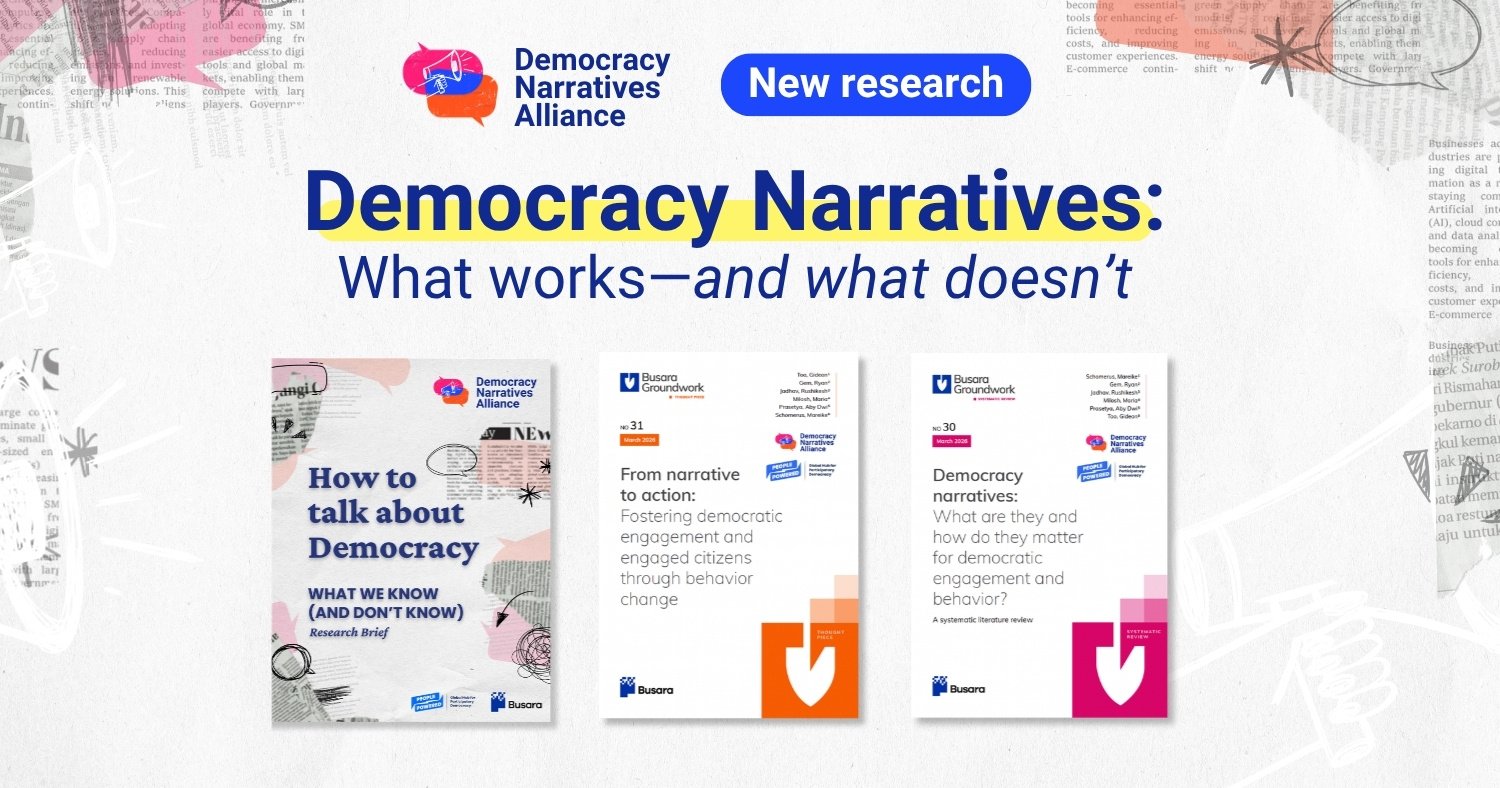
The Democracy Narratives Alliance (DNA) has released How to Talk About Democracy: What We Know (and Don’t Know), a new research brief that maps the dominant narratives shaping how people understand democracy and identifies practical strategies for rebuilding support, engagement, and participation.
What’s in the brief:
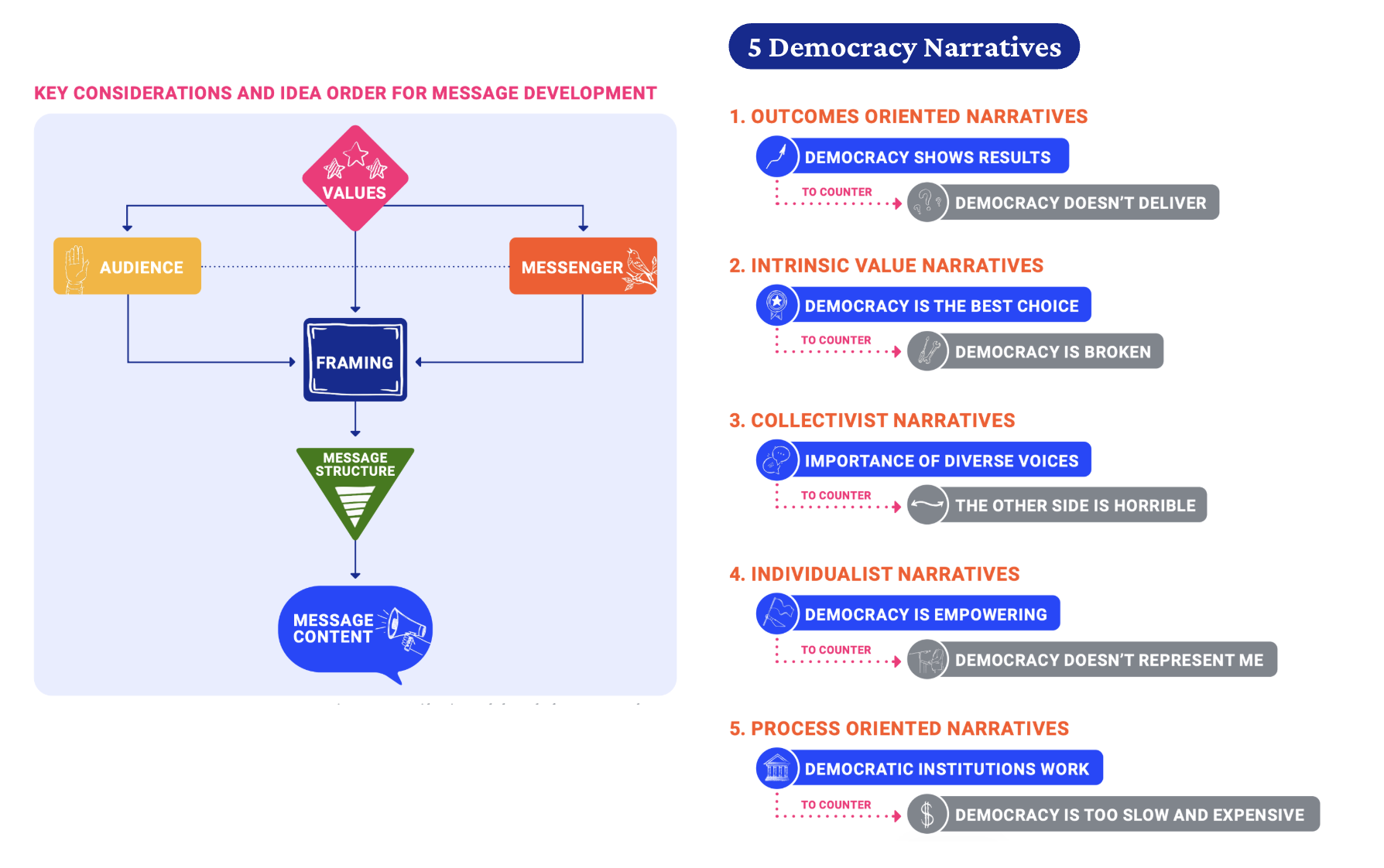
Five categories of democracy narratives that shape public attitudes — from outcomes-oriented to process-oriented — each paired with the counter-narrative it can address
Practical guidance on messaging: how values, audience, messenger, framing, and message structure all influence whether communications land
Real-world examples from Ghana, Tunisia, India, France, Ireland, and beyond
Do’s and don’ts for countering disengagement narratives: including why pre-bunking works and crisis framing doesn’t
The brief synthesizes evidence from over 150 studies from academic and practitioner publications, and insights from more than 40 organizations, researchers, and funders who are part of the DNA.
Take a look inside:
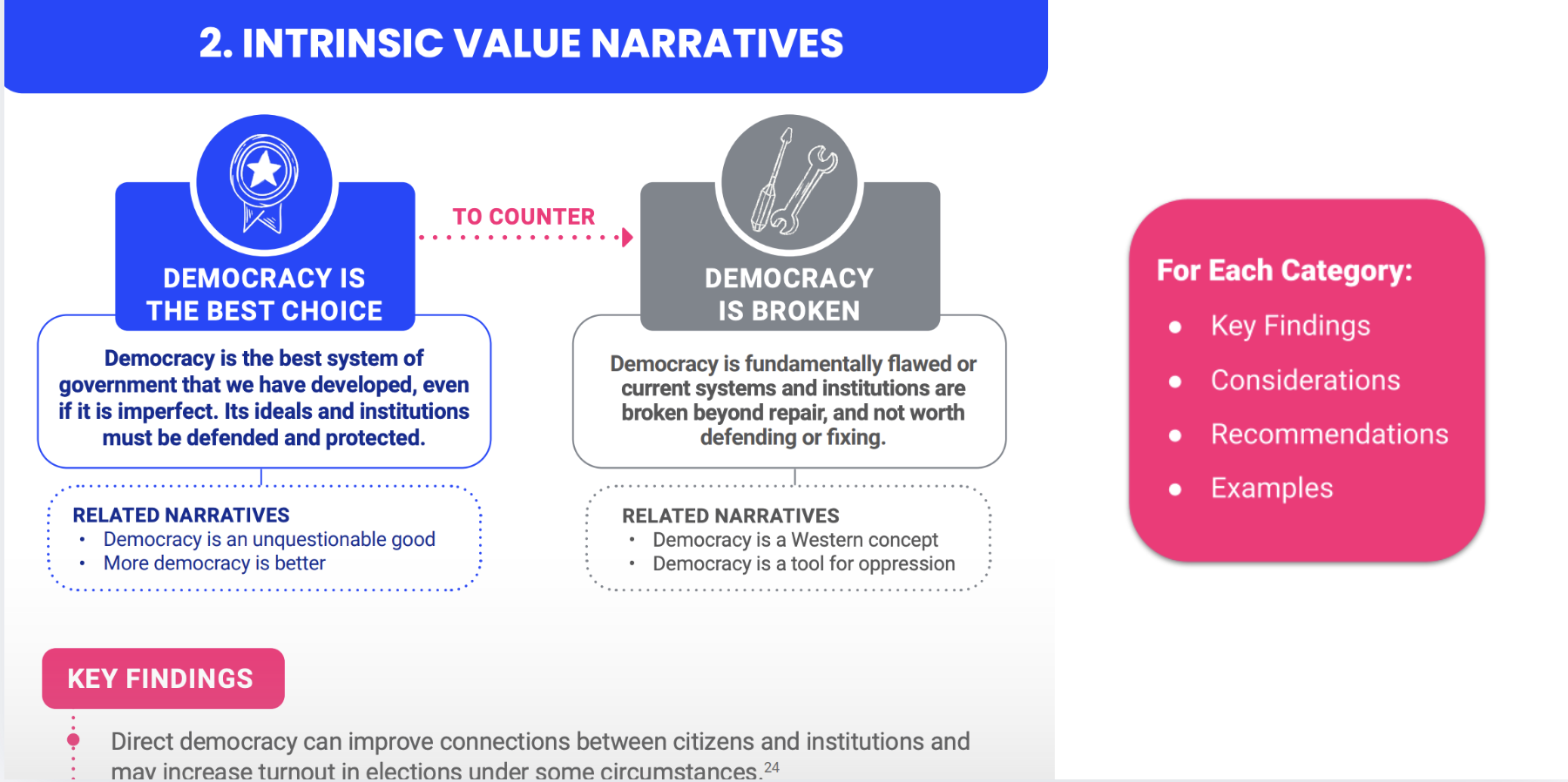
The brief is part of a three-part research series produced by People Powered and Busara for the DNA. The series also includes a systematic literature review examining how narratives about democracy shape engagement and behavior, and a behavioral change brief that uses the COM-B model to explore how capability, opportunity, and motivation determine whether people participate in democratic practices. Busara has released the literature review and behavioral change brief, both available at busara.global.
The research series was launched at a DNA webinar on March 24, where researchers and practitioners discussed its findings and implications. Watch the recording now!
About the Democracy Narratives Alliance
People Powered co-leads the DNA alongside partners in the Global Democracy Coalition. The DNA brings together more than 40 organizations, research institutions, and funders working on democracy and communications. It was launched to coordinate and consolidate narrative change efforts across the democracy field. The research series is an initial step in building a shared evidence base for this work.