



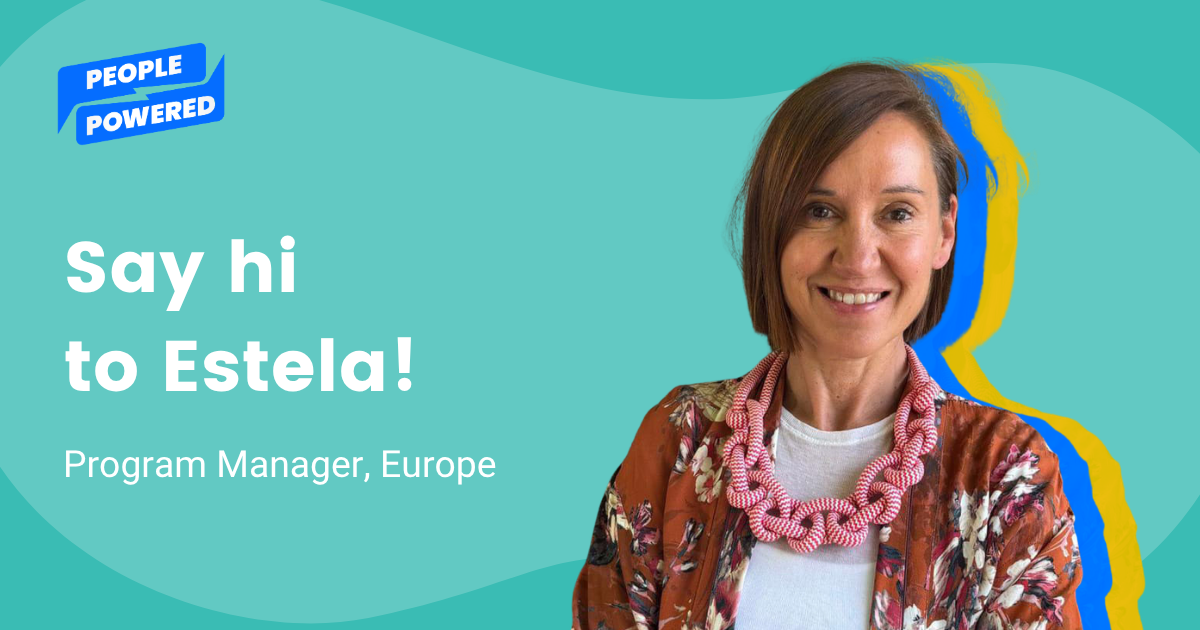
Meet Estela our new Program Manager, Europe
/
Ask most people about participatory democracy and you'll hear a story about progress. Estela Vidal has been doing this work for twenty years, and she'll tell you the story of steady forward motion doesn't match what she's seen.
She spent nearly a decade in Malawi before moving back to Spain with her family in 2016, and then to Ireland, where, as an Irish-Spanish family, they wanted their children to have a connection to their Irish roots. Across that span she has worked with civil society organizations, governments, and international partners, watching spaces for participation open up in one country while they narrowed in another.
At People Powered, Estela leads our programs across Europe, working with governments, civil society organizations, and communities to build participatory processes that hold. That work includes Nets4Dem, a consortium connecting democracy networks across Europe to strengthen how people participate in public decision-making. She supports partners there through training, mentoring, and peer learning, to make sure community perspectives don't just get collected, but get used.
We asked Estela what two decades have taught her about power, and why Europe's reputation as a participatory success story looks more complicated from the inside.
1. You've been doing this work for over 20 years, across Europe, Latin America, and Africa. What's changed most about how people think about participation in that time, and what hasn't changed at all?
Over the past 20 years, one of the biggest changes I’ve seen is that participation is much more shaped by the wider geopolitical context. There hasn’t been a linear progression towards more openness or more opportunities for people to engage with governments. In some places, spaces that were once open to civil society have narrowed or closed, while in others, new opportunities are emerging.
At the same time, people are much more connected than they were 20 years ago. Social media, greater access to news and information, and stronger connections across countries mean that communities can learn from experiences elsewhere and see different ways of engaging with decision-makers. This can be incredibly powerful, although it also brings new challenges around misinformation, polarization and trust.
What hasn’t changed is the importance of people wanting to have a voice in the decisions that affect their lives. Whether you are working in Europe, Latin America or Africa, people want to feel that their experiences matter and that speaking up can lead to something. The challenge is making sure that those voices are not only heard, but actually reach the people with the power to act on them.
2. Power is the word that often gets dropped when people talk about participation. Why does it matter to keep it in
I think power is essential to any conversation about participation, because participation is ultimately about who has the power to influence decisions and shape the things that affect our lives. That is one of the ideas that really connected me to People Powered and to the vision of creating People Powered Governments.
Working on participatory democracy, I think it is important not only to create opportunities for people to participate, but also to motivate and empower people to recognize that they have power themselves: the power to influence, to organize and to contribute to positive change. Participation is much more meaningful when people feel that their voices can actually make a difference.
But power also needs to shift. Governments and institutions naturally tend to hold on to decision-making power, and meaningful participation requires us to question that balance. It is not about taking power away from governments, but about creating a healthier relationship between governments and people, where decision-making is more open, shared and accountable.
For me, that means finding a way to meet in the middle: governments being willing to share power and create genuine spaces for influence, and people having the confidence, tools and opportunities to use their voice. If we leave power out of the conversation, we risk making participation feel like simply being consulted rather than actually having a say and influence positive change.
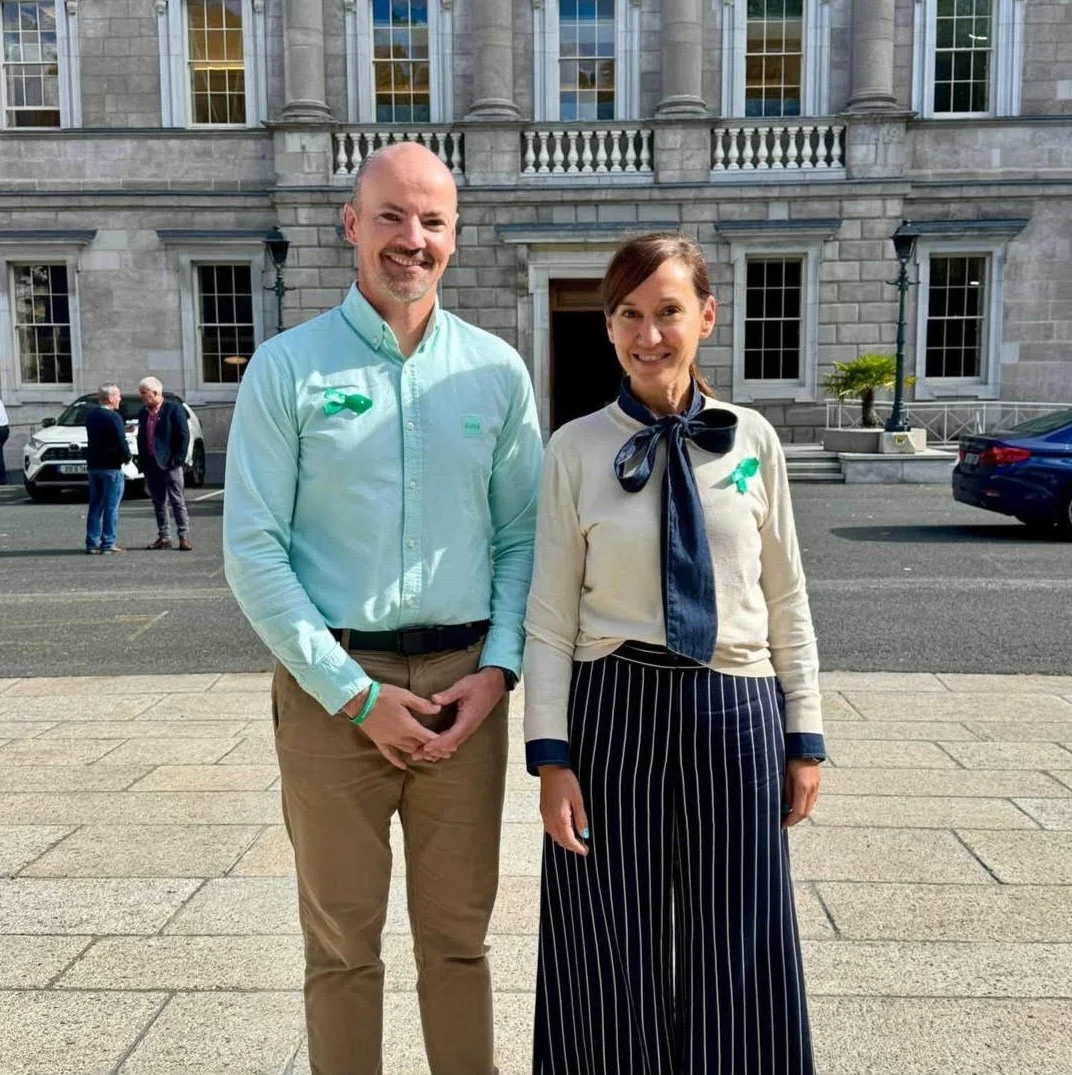
Left: With colleague Kieran Murphy from Shine outside Leinster House (Parliament) in Ireland, waiting for a session to meet politicians and discuss budget allocations for 2026. Credit: Shine
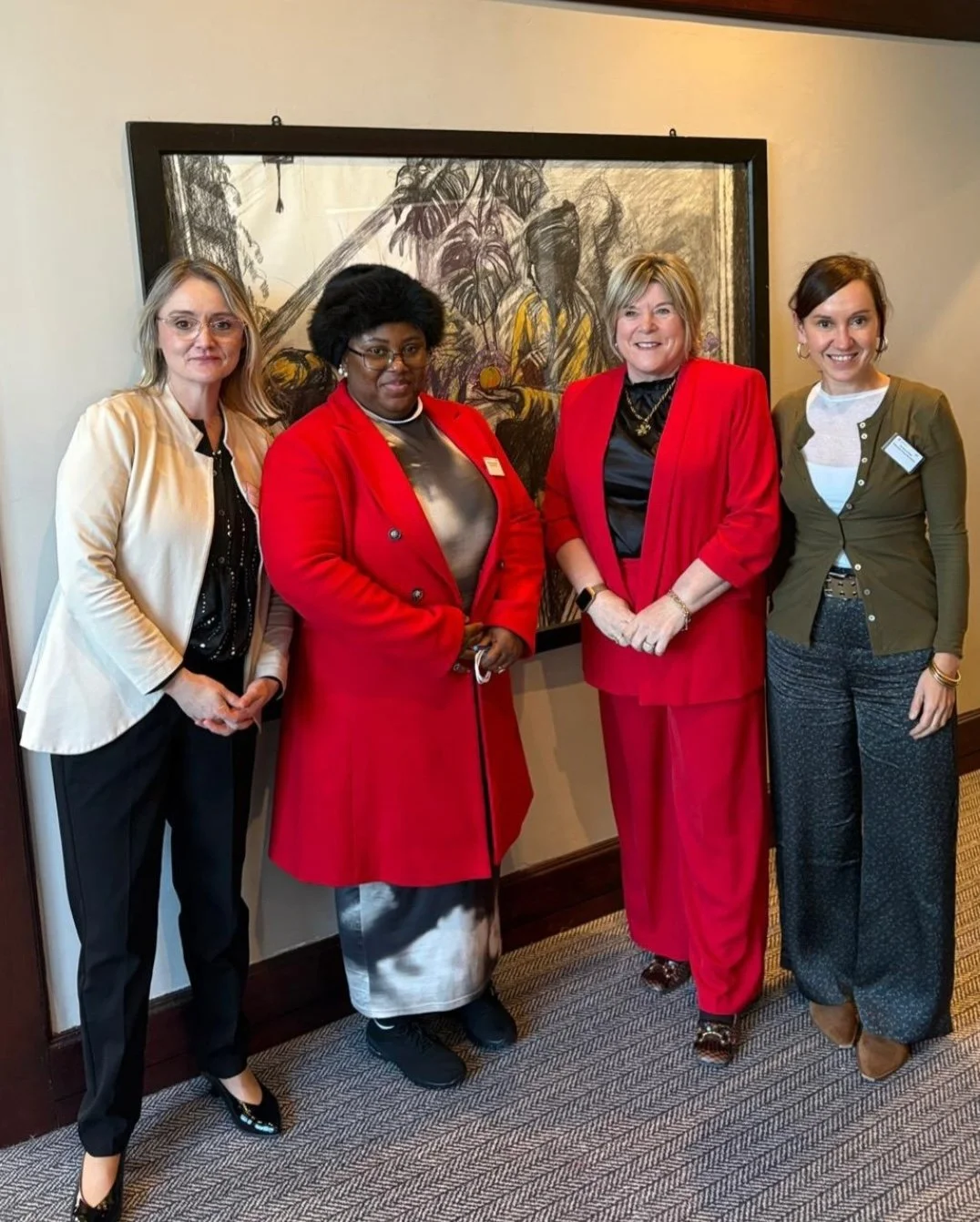
Right: With Minister for Mental Health Mary Butler and colleagues from the Participatory Reference Group, at a session discussing updated reports on the implementation of Ireland’s Mental Health Policy. Credit: Shine
3. Europe has a reputation as a success story for participatory democracy. What do you see from the inside that people outside the region might not?
I think Europe is sometimes seen from the outside as a success story for participatory democracy, but from the inside, it feels much more complex and uneven. Europe is not moving in a straight line. We are seeing significant political change, and in some countries there is a growing polarisation around issues such as migration, identity and social rights. Some of the openness and progress we may have taken for granted in the past is now under pressure.
At the same time, there are still many positive examples emerging. Some countries and cities are experimenting with new ways of involving people in decision-making, while others are learning from approaches that have worked elsewhere. What I find particularly valuable about Europe is that every country has its own history, identity, political culture and way of doing things. There is no single European model of participation.
Perhaps what people outside the region don't always see is this diversity, and the enormous opportunity it creates to learn from one another. There are successes, setbacks and new ideas happening at the same time. The challenge is to recognise what is working, share those experiences more widely and amplify the positive examples, so that they can inspire others.
For me, the European experience is a reminder that participatory democracy is never something we can simply achieve and then take for granted. It needs to be continuously nurtured, defended and adapted to changing political and social realities.
4. What's Estela like outside of work?
Outside of work, a perfect day for me would include a long power walk in nature, watching one of our teenage kids play football from the sidelines, and dinner outside, on a terrace or in a square, with good friends and family, laughing about the simplest things. And, of course, a good book to wrap up the day.
I spend a lot of time between Spain and Ireland, and as an international family, we’ve managed to build strong lives in both countries, with family, homes, friends, activities and communities. I think we’ve managed to create a real sense of home in both places, which is something I really value.
I also try to plan an exciting family trip from time to time. Having something to look forward to, and even the excitement of preparing for it really motivates me. I love the anticipation, the conversations about where we’ll go and what we’ll do, and having something on the horizon to look forward to. It gives me something to work towards and helps keep me going through those long, dark winter afternoons.
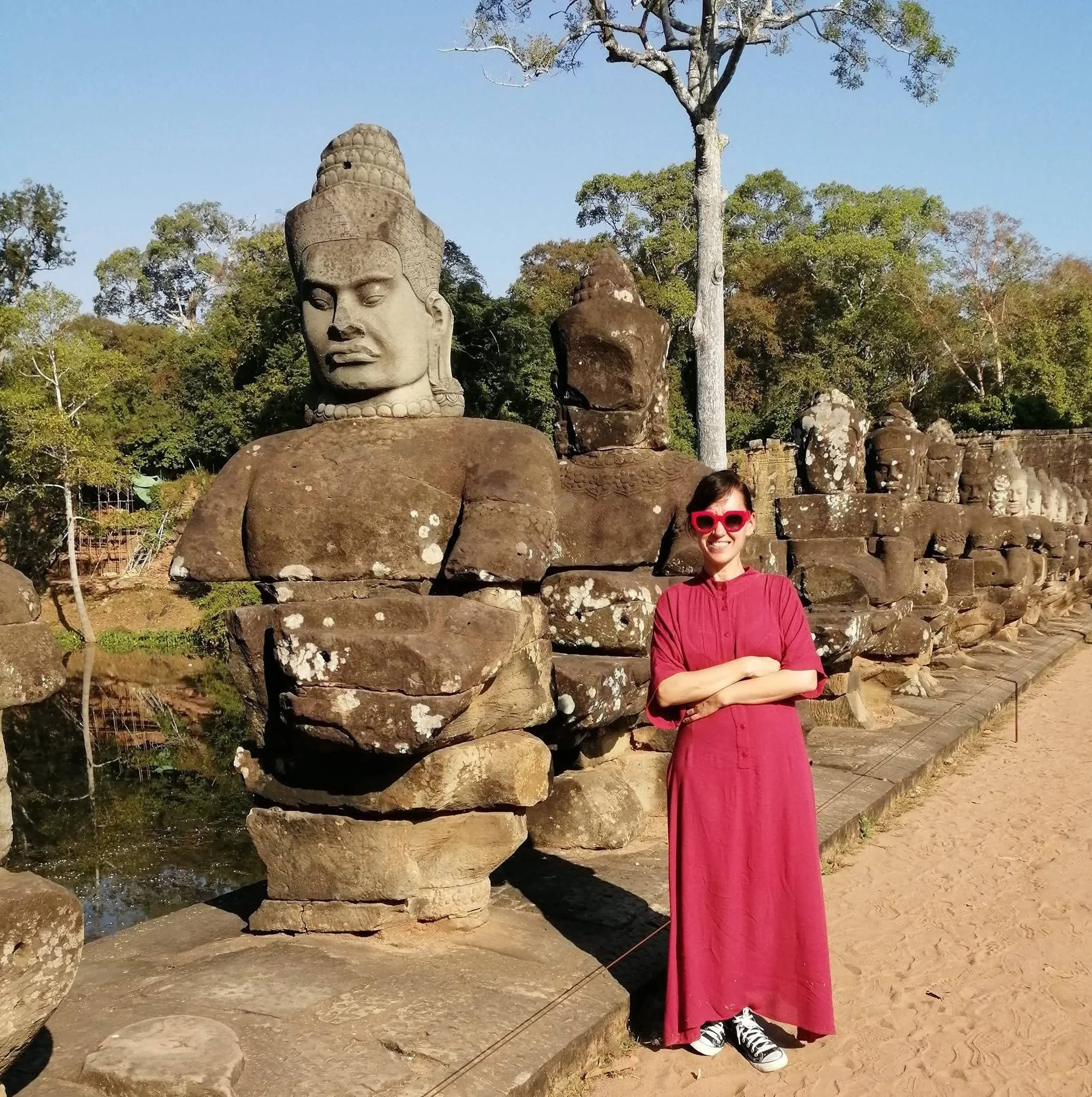
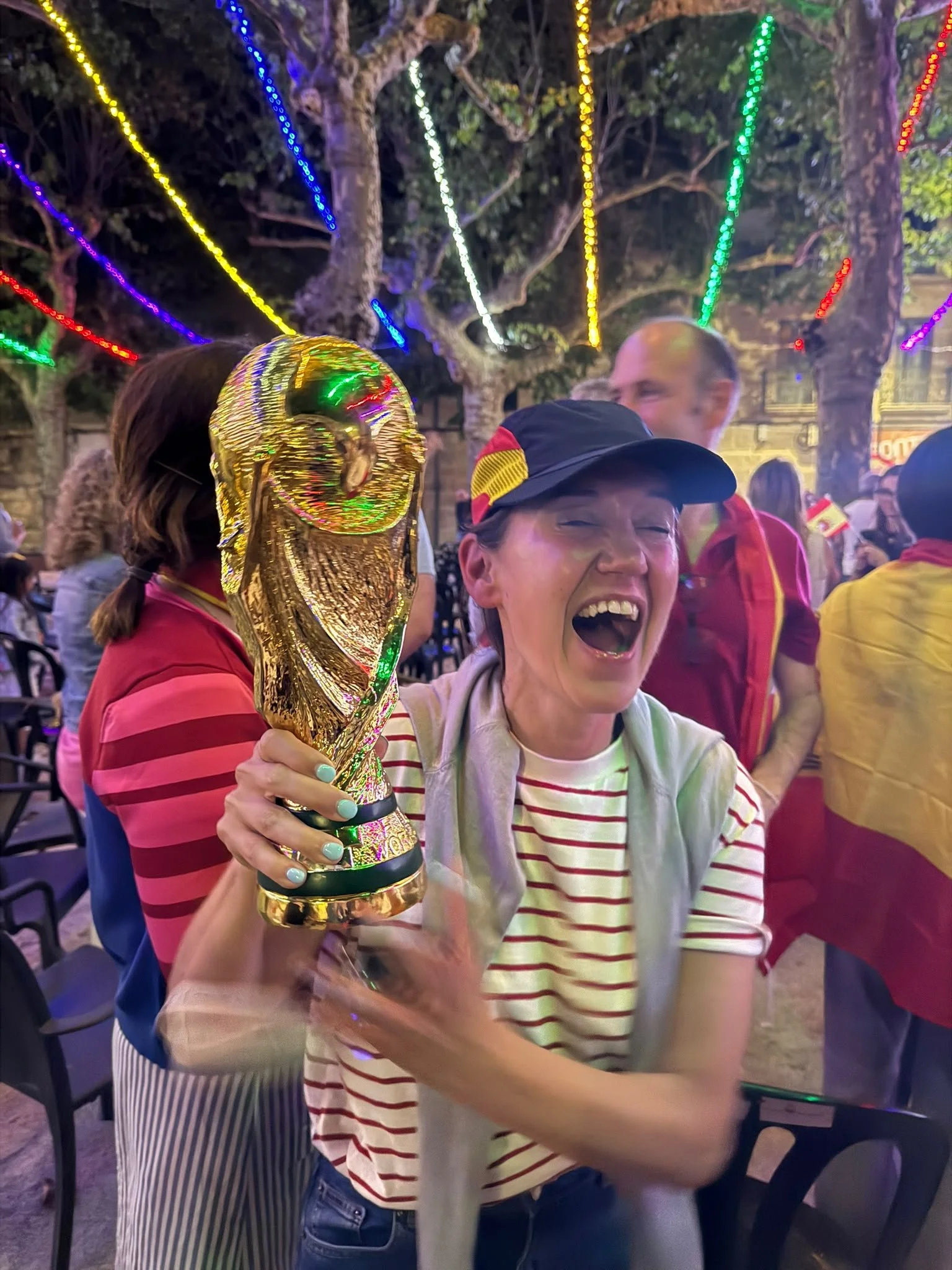
Left: Travellng around Southeast Asia (photo taken in Cambodia). Right: At the World Cup in Spain.
People Powered is a founding partner of Nets4Dem, a consortium of European and global organizations funded by the European Union to strengthen democratic participation across Europe. Estela leads our contribution, working with partners across the network to adapt our programs and resources for European contexts.